Organizations now use online training platforms as their primary method for employee learning and organizational development. The delivery of educational content has shifted from traditional classroom sessions, printed manuals and tools to digital systems which enable large-scale learning operations.
The right selection of platforms for companies that spend money on employee development will determine their future success. The system creates three main effects on training operations because it determines learning speed, delivery stability, result assessment precision.
The selection of a suitable platform requires more than seeking additional features or selecting the platform with the highest user base. The process requires organizations to discover training systems which match their current training methods and their future training requirements.
What Are Online Training Platforms?
Online training platforms function as digital learning spaces which enable the delivery and management of learning activities and their subsequent tracking. The system unites all learning elements through a unified platform which allows users to access it wherever they are.
Definition
Online learning platforms enable organizations to transform their disorganized training systems into systematic programs which can be tracked for performance measurement. The system provides teams with an organized method to conduct training sessions and track student development.
Purpose
These platforms enable users to access educational resources and monitor their advancement while obtaining official certification credentials. Organizations gain both visibility and control over their knowledge distribution and application through these systems.
Common Use Cases
Online learning platforms serve multiple educational needs through their various applications.
- Employee onboarding and role-based training
- Compliance and mandatory training programs
- Professional development and upskilling
- Leadership and management training
- Customer and partner education
The platform needs to support different user groups because it operates as a single platform which requires flexible functionality.
Learning Formats Supported
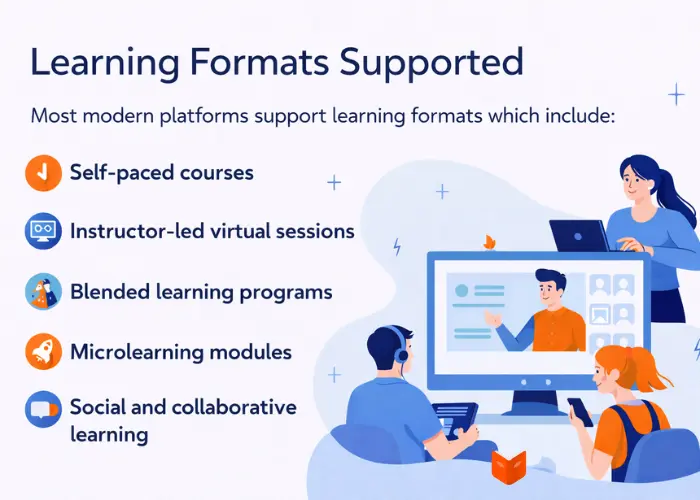
Most modern platforms support learning formats which include:
- Self-paced courses
- Instructor-led virtual sessions
- Blended learning programs
- Microlearning modules
- Social and collaborative learning
Organizations can select learning delivery methods which suit their specific goals and match the needs of their employees based on their roles and individual learning abilities.
Why Choosing the Right Platform Matters
Training Success and Learner Outcomes
Training effectiveness requires elements which extend beyond the quality of the content. The platform becomes useless when students face difficulties with navigation, their work disappears and they stop participating in the course before completion.
A platform which is properly selected will decrease all obstacles that users need to overcome. The system enables students to concentrate on their education instead of spending time understanding its operational mechanisms.
Learning Efficiency and Engagement
The combination of interactive features with feedback systems and visible progress tracking elements leads to better user involvement. Students will finish their courses when they experience a meaningful and easy-to-use learning process instead of facing unnecessary difficulties.
Scalability and Future-Proofing
Training needs to change. The organization needs to adapt its training programs because teams expand while job responsibilities shift and organizations require different competencies.
A system which functions during initial testing but fails to expand will transform into a barrier which hinders progress instead of providing a solution.
Your business investment will remain protected through system selection which allows organizational expansion without requiring expensive future system migrations.
Business Productivity and Performance Impact
The implementation of effective training methods leads to shorter onboarding periods while decreasing mistakes and enhancing team member self-assurance. The process leads to improved operational results, enhanced regulatory adherence and quantifiable performance improvements.
Key Features to Look for in an Online Training Platform
Course Authoring Tools
The platform includes built-in content creation tools which enable users to perform updates when their organizational processes undergo modifications. The system should provide backing for video content, documents, interactive elements and organized learning pathways which operate independently from complex technical systems.
User-Friendly Interface
A platform which offers strong capabilities will fail when users find its interface complicated to navigate. The system requires users to access essential features through simple navigation paths which lead to logical dashboard interfaces that need only few clicks to operate.
Interactive Learning Experience
The platform enables students to maintain their interest through discussion areas, quizzes, scenario-based activities and collaboration tools which help them use their learned material instead of simply reading it.
Assessment and Quiz Capabilities
The process of measuring through assessments serves as a crucial method to confirm student comprehension. The system provides flexible quiz formats together with automatic grading and clear feedback which enables both learners and administrators to track their progress.
Real-Time Analytics and Reporting
The data from analytics systems reveals the actual events which occur during your training programs. The data shows which learning activities succeed and which ones fail through student completion rates, their points of departure, their test results.
Integrations and API Support
Training operations function independently from other activities. The system integrates with HR systems and communication tools, internal software to automate tasks which results in better data accuracy.
Mobile Learning Support
Mobile access has become an essential requirement for all organizations. The training system needs to provide learners with access to training content during their downtime and travel periods and flexible work hours without any loss of system functionality.
Certification and Tracking Options
The system requires certificates and progress records for both regulatory compliance and staff development and organizational performance tracking. The platform needs to provide users with an easy method to monitor their activities while maintaining complete audit capabilities.
Security and Compliance Features
Organizations need to protect their data while controlling access to it because they must follow privacy regulations which become more important when they operate in different countries or business sectors.
Comparing Different Types of Online Training Systems
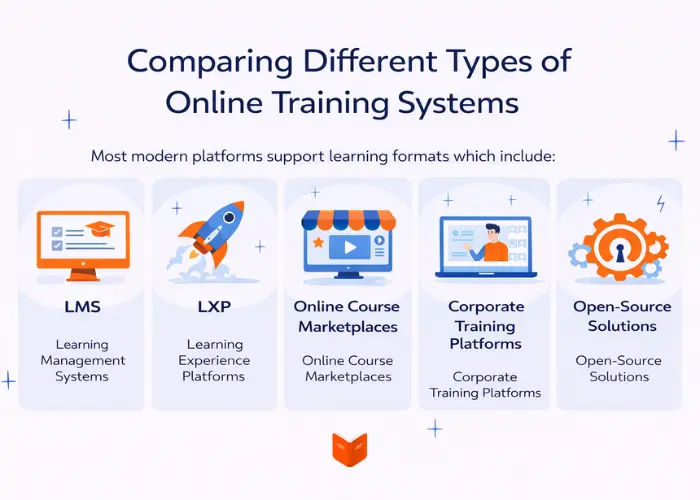
LMS (Learning Management System)
An LMS provides a system which enables organizations to deliver training programs through structured delivery while monitoring student progress and generating reports about their training activities.
Pros
- Strong control and compliance tracking
- Centralized management
- Clear reporting structure
Cons
- The system becomes inflexible when users cannot adjust its features to meet their needs.
- Less emphasis on personalized learning
LXP (Learning Experience Platform)
The main focus of an LXP system allows students to select their own learning path while they discover content at their own pace.
Pros
- Higher engagement
- Supports informal and social learning
Cons
- Limited compliance tracking
- The system functions best when it works alongside an LMS system instead of trying to replace it.
Online Course Marketplaces
The platform enables users to access educational content from outside providers through its marketplace feature.
Pros
- Fast access to ready-made content
- Minimal setup
Cons
- Limited customization
- Ongoing licensing costs
Corporate Training Platforms
The system operates for organizations which have extensive requirements because of their size.
Pros
- Scalable and secure
- Advanced analytics and support
Cons
- Higher cost
- Longer setup time
Open-Source Solutions
Open-source platforms offer flexibility and control.
Pros
- Customizable
- No licensing fees.
Cons
- Requires technical resources
- Your team needs to handle all maintenance duties.
How to Evaluate Platform Pricing
Subscription-Based Pricing
The system requires users to pay recurring fees which provide access to product updates and technical assistance. The service follows a predictable pattern but its expenses increase when users access it more frequently.
Per-User Pricing
The pricing system uses the total number of learners and admins as its basis for determining costs. The system functions best when working with small teams but it becomes less effective when the team size increases.
One-Time Payment
The software exists as a rare find in modern times because it lacks ongoing updates and extended maintenance support.
Feature-Based Pricing
The cost of the system rises when users activate its sophisticated capabilities.
Hidden Costs to Check
- Implementation and onboarding
- Custom development
- Storage limits
- Premium support
Essential Questions to Ask When Choosing
Does it support scalable training programs?
The system requires additional resources to expand its operations without causing any problems to current students or database information.
Is it customizable?
The system needs to adjust its operations based on your current business processes and your organization’s branding elements and training programs.
Does it integrate with my tools?
The system will decrease human tasks or create additional operational difficulties.
Will it grow with my company?
The platform shows evidence of ongoing development because it receives regular updates which enhance its functionality.
Does it improve learning outcomes?
You can evaluate program effectiveness through metrics which extend past student achievement of course completion.
How to Test Before Choosing a Platform
- Free Trials and Demos: the system requires actual user data instead of using simulated information which demo data represents.
- Pilot Projects: run a small program to identify gaps before committing.
- Evaluate Learner Feedback: students’ learning experiences tend to show problems which school leaders fail to detect.
- Compare Analytics Results: the platform shows its measurement capabilities through its ability to deliver insights which are easy to understand.
- Check Real User Reviews: Independent reviews together with long-term user feedback help users understand products better than marketing statements do.
Final Checklist
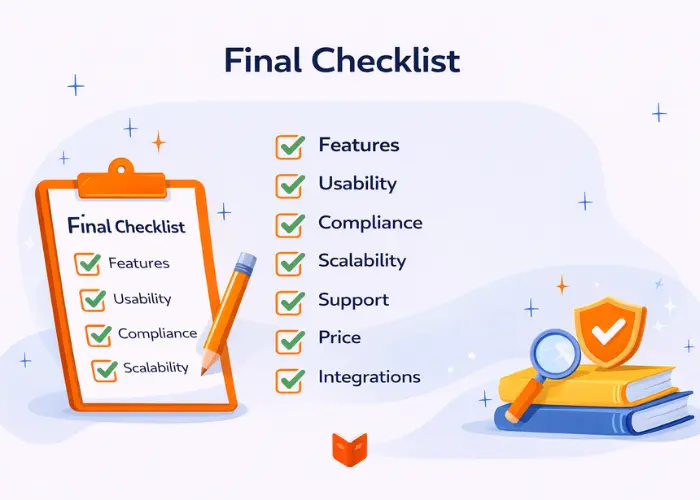
Features – Does it cover your current and future needs?
Usability – Can learners and admins use it easily?
Compliance – Does it meet regulatory and security requirements?
Scalability – Will it handle growth without friction?
Support – Is help available when issues arise?
Price – Is the value clear and sustainable?
Conclusion
The selection of an online training platform requires strategic thinking instead of following technical guidelines. The right platform enables learning according to human learning patterns while it scales with your organization and shows you the specific results of your training programs.
Online learning platforms which receive proper selection will evolve into systems which drive ongoing development and information exchange and sustained organizational success.
FAQ
What are online learning platforms used for?
The system enables digital delivery of training content which allows users to track their progress during onboarding and compliance and professional development programs.
Do online training platforms exist for businesses of all sizes including small and large organizations?
No. Many platforms are designed to support small teams and grow alongside them.
Which elements will determine the enduring success of a business?
The system requires usability features together with analytical tools, scalable architecture and flexible integration capabilities.
What’s the duration of testing needed before making a decision remains unclear?
A two to four week focused pilot enables organizations to obtain necessary data which supports their decision-making process.