The worldwide need for online learning education keeps growing during 2026 because people together with their organizations dedicate more resources to digital learning programs.
Experts now earn money from their expertise while businesses establish their own academic institutions and knowledgeable content producers develop educational materials which generate steady financial returns.
The increasing competition requires course creators to find platforms which offer services that extend past basic content storage capabilities.
The two main solutions for creators include:
- Hosted platforms which enable them to maintain control over their brand identity and customer information
- Online course marketplaces which offer pre-existing customer bases yet restrict full ownership rights.
The selection of an online course sales platform requires knowledge about the fundamental distinction between these two options.
What to Look for in a Course Selling Platform
Monetization and Payouts
The system needs to have reliable payout systems together with multiple payment options and clear fee structures. The platform needs to enable users to make international transactions while providing them with stable payment timelines.
Course Pricing and Bundles
The pricing flexibility of one-time purchases, subscriptions, bundles and upsells enables creators to reach various audience segments through multiple revenue models.
Sales and Marketing Tools
The platform enables creators to sell their courses through built-in checkout pages, provides them with coupons, email automation and affiliate tools which reduce their need for external software.
Student Experience
The system achieves better completion rates and customer satisfaction through its user-friendly design which provides simple navigation and instant device access.
Learning Features (Certificates, Quizzes)
The combination of certificates with quizzes and progress tracking systems provides both credibility and organizational structure which works best for business users and corporate settings.
Integrations
The system enables users to link their email applications with CRM systems and analytics platforms which streamlines their work and enables business expansion.
Mobile Access
Mobile-friendly learning has become an essential requirement for all educational institutions. Students need to be able to learn at any time from any location.
Analytics and Reporting
The sales data together with student engagement metrics and course performance insights enable creators to improve their content development and their marketing approach.
10 Best Platforms to Sell Online Courses in 2026
1. Teachable
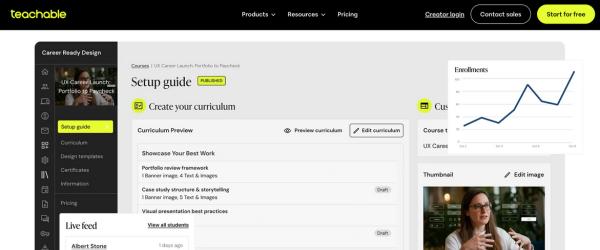
The platform Teachable operates as a hosted course selling system which enables users to maintain complete control over their educational material, revenue structure and student interactions.
Teachable provides instructors with the ability to create their own branded course pages while they maintain complete control over student data and checkout processes.
Teachable enables users to generate money through its payment features which include:
- One-time payments
- Subscriptions
- Bundles
- Coupons
- Upsells
The platform enables creators to provide coaching services which they can combine with their existing course offerings for educational services and service-based business models.
Teachable provides users with learning features which enable them to:
- Host videos
- Create quizzes
- Generate certificates
- Monitor student progress
Best for: Independent creators and small businesses that want full control over pricing, branding, and student relationships without building custom infrastructure.
Pricing: Starts at 13/month.
2. Kajabi
The platform Kajabi functions as a complete business solution system which extends beyond its basic functionality for selling courses. It includes all necessary features for course hosting as well as:
- Email marketing tools
- Landing page creation
- Sales funnel development
- CRM capabilities
- Automation workflow management
The platform provides creators with exceptional marketing sequence, evergreen funnel and recurring revenue management capabilities.
The available options for course monetization include:
- Subscription models
- Membership programs
- Bundle deals
- High-priced educational programs
Kajabi enables creators to unite educational content with community features which enable them to build learning experiences that include student participation.
The learning features of Kajabi include:
- Course delivery systems
- Assessment tools
- Drip content distribution
Best for: Entrepreneurs and business owners selling premium courses, memberships, or coaching programs with a strong marketing focus.
Pricing: Starts at $89/month
3. Thinkific
Thinkific provides users with a versatile course platform which offers simple operation alongside advanced customization options. The platform enables creators to create organized learning sequences, courses with built-in prerequisites and multiple course combinations
Thinkific enables users to generate revenue through different payment methods which include:
- Single transaction sales
- Recurring subscription fees
- Package deals
- Business-to-business sales
The platform provides users with powerful integration tools which enable them to link their system with:
- Outside analytical platforms
- Email marketing solutions
- Payment processing systems
Thinkific provides users with advanced learning features which include:
- Assessment tools
- Certificate generation
- Complete student progress monitoring capabilities
Best for: Educators, training companies, and organizations that need flexibility, scalability, and structured learning without moving into enterprise LMS complexity.
Pricing: Starts at $49/month
4. LearnWorlds
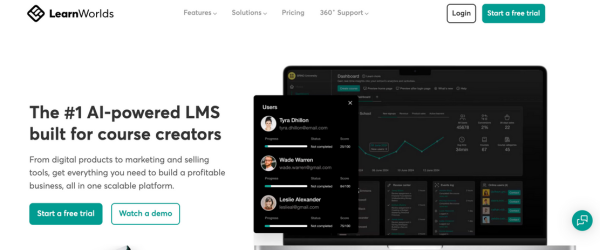
The platform at LearnWorlds dedicates its main attention to creating an optimal learning environment for users. The platform stands out because it enables creators to add interactive video elements which include:
- Quizzes
- Buttons
- Navigation controls
That users can access through their video content.
The platform enables users to access:
- Certificates
- Assessments
- Learning paths
- Branded academies
Which makes it an ideal solution for professional education and skill-based training.
It provides creators with detailed analytics about learner actions which enable them to measure student success through metrics that go past basic completion tracking.
LearnWorlds enables users to generate revenue through:
- Subscription services
- Membership programs
- Package deals for courses
It also provides users with marketing resources, which enable them to collect leads and perform fundamental automation tasks
Best for: Educators and training providers who prioritize interactive learning experiences and instructional design quality.
Pricing: Starts at $29/month
5. Podia

The platform operates with a basic design approach. It simplifies online course sales by eliminating complex technical requirements which enables users to establish their platform quickly through an intuitive interface.
The platform enables creators to manage sales of their courses together with digital downloads, memberships and webinars through one unified dashboard.
To eliminate users need for technical or marketing expertise Podia provides creators with:
- Built-in email marketing tools
- Checkout pages
- Customer management features
Podia lacks sophisticated learning tools which include complex assessment systems and certification programs but it succeeds in delivering basic courses and generating revenue from content.
Best for: Solo creators and small audiences who want a simple, low-friction way to sell educational content.
Pricing: Starts at $39/month
6. Udemy
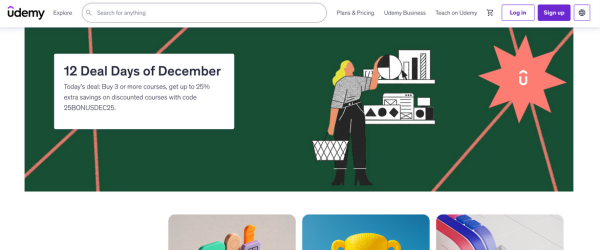
Udemy operates as one of the world’s biggest online course platforms which enables creators to connect with millions of potential students.
The platform of Udemy serves as the hosting location for its courses while students find their learning opportunities through the platform’s built-in marketplace and promotional activities.
The trade-off is control. The management of pricing, discounts and promotional activities falls under Udemy control while creators earn money from their courses through a revenue sharing model instead of obtaining complete ownership of their content.
The company restricts customer data access which creates obstacles for establishing enduring direct connections with customers.
The platform functions best as a tool to help users find new opportunities and confirm their value but it should not serve as the main platform for running a business.
Best for: New instructors who want to test market demand and creators who need to maximize their audience reach even if it means sacrificing control over prices and brand identity.
Pricing: Starts at $19/month
7. Skillshare
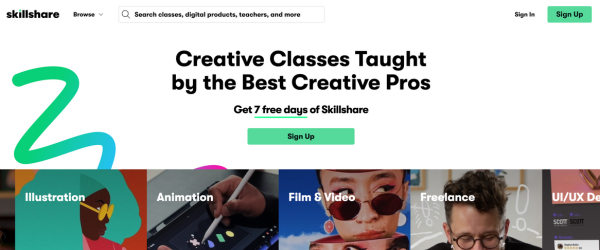
The subscription-based marketplace of Skillshare operates through a system which pays creators based on their content watch duration instead of traditional course purchase methods.
The platform dedicates most of its content to creative, design and lifestyle-related subjects
.
The platform Skillshare focuses on providing accessible short learning experiences which do not support the delivery of professional certifications or organized educational programs.
The company has limited control over its branding and pricing strategies yet it reaches a large audience who are interested in creative content.
Best for: Creative professionals who want to gain visibility and earn passive income instead of selling their courses directly.
Pricing: Customised for each case
8. Mighty Networks
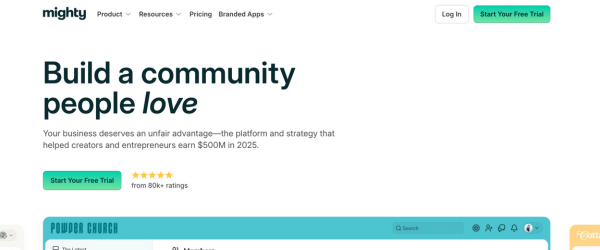
Mighty Networks delivers educational content through its platform which also enables users to create social networks.
It promotes members to develop their courses through membership programs which unite educational content with interactive discussions, social events and student networking opportunities.
The platform enables users to purchase memberships, subscriptions, participate in cohorts and events which suit relationship-based learning approaches.
The system allows community members to access courses through gated access which helps them stay involved and maintain their membership.
It offers stable learning functions which remain less important than the ability users have to connect with each other.
Best for: Creators building communities, cohorts, and membership-based learning businesses.
Pricing: Starts at $49/month, offers free trial.
9. Gumroad
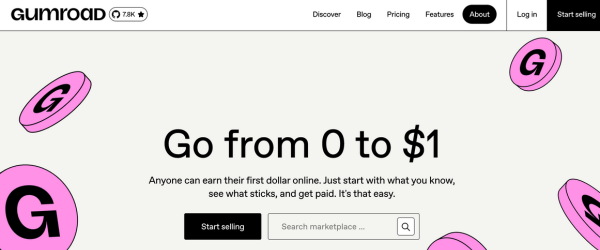
The digital commerce platform Gumroad operates as a simple system which enables creators to start selling courses, files, subscriptions through easy configuration.
The system operates as a financial tool instead of following the standard structure of a traditional Learning Management System (LMS).
The system provides basic course delivery functions which restrict users from accessing additional learning tools.
The platform Gumroad provides users with quick market entry and allows them to set their own prices while keeping their costs minimal. The analytics system tracks sales performance instead of monitoring student learning activities.
Best for: Digital creators who want to sell their educational content including small courses and experiments and specialized educational products.
Pricing: Starts at 10% + $0.50 per sales
10. Hotmart

Hotmart operates as a worldwide digital product marketplace which provides effective affiliate marketing solutions to its users.
The platform finds its highest user base in foreign markets while offering users the ability to subscribe and make recurring payments and purchase digital products.
It provides creators with three essential features which include:
- Payment processing
- Localized checkout experiences
- Affiliate distribution
The ability to control branding and prices on this marketplace platform remains restricted when compared to traditional hosted platforms.
Best for: Creators who want to reach viewers across the world and build their audience through affiliate marketing programs.
Pricing: Free Trial, customised after
Comparison by Key Factors
Pricing Structure
The two main pricing models which course selling platforms use include marketplace revenueshare and hosted monthly subscriptions.
The platforms Udemy and Skillshare and Hotmart operate as marketplaces which charge a percentage of each sale made through their platforms to provide hosting services, payment processing and audience access.
The majority of hosted platforms including Teachable, Kajabi, Thinkific, LearnWorlds, Podia, Mighty Networks and Gumroad operate with set monthly subscription rates that do not impose any processing fees for transactions.
The main point is that marketplaces enable businesses to start operations at a lower expense but they must surrender control over their revenue streams.
The initial investment for hosted platforms exceeds that of marketplaces yet these platforms demonstrate superior growth potential during their operational period.
Best for Beginners
New creators who begin their work from scratch tend to focus on creating simple entry points which help them achieve their first sales quickly.
The best platforms for new users to start their learning journey include Udemy and Skillshare.
The best platforms for new users to host their content include Podia and Gumroad.
The marketplace enables creators to upload their content without needing to handle marketing tasks or perform technical configuration.
The platforms Podia and Gumroad provide basic solutions for new users who need to maintain ownership of their content without dealing with complicated systems.
Best Marketplace Exposure
The built-in discovery system helps creators who do not have any existing fans to find their content.
The platform which provides me with the most exposure to potential customers includes Udemy, Skillshare and Hotmart.
These platforms operate their own traffic generation systems which enable users to verify market interest and access worldwide students at high speed.
The process of exposure requires businesses to surrender their ability to determine prices and develop brand identities.
Best for Business Owners
Business owners require three essential elements for their operations which include branding control and customer ownership and advanced sales tools.
Business owners should use Kajabi, Teachable, Thinkific and LearnWorlds as their preferred platforms.
These platforms enable users to create their own brand identity while offering email marketing tools, funnels, upsell capabilities, customer data control which makes them appropriate for businesses that want to establish long-term education operations instead of selling single courses.
Best for Selling Memberships
The success of recurring revenue models depends on maintaining both community engagement and subscription-based revenue streams.
The best platforms for membership-based and subscription-based learning content exist on Mighty Networks, Kajabi and Podia.
Mighty Networks achieves success through its ability to unite educational content with social interaction between members.
Kajabi and Podia enable businesses with membership models to establish subscription plans and protect their content through access restrictions.
Best for Digital Creators
Some creators choose to focus on fast development and flexible testing instead of building complete learning systems.
Best for digital creators: Gumroad, Podia, Skillshare
These platforms function best for creators who want to market their specialized educational content which includes brief learning materials and innovative educational materials that do not require certification programs.
How to Choose the Best Platform
What to Consider
Course type
One-time course, certification, or membership
Marketing strategy
Organic audience vs marketplace discovery
Budget
Monthly fees vs revenue share
Audience location
Payment methods and localization
Long-term growth
Data ownership and scalability
Final Recommendations
There exists no single platform which provides the optimal solution for selling online courses. Your pricing model, growth objectives and desired level of control will determine which option works best for you.
Marketplaces provide both fast access to customers and clear product exposure. Hosted platforms enable users to maintain ownership while allowing them to brand their content and achieve sustainable growth through their platform.
Conclusion
Online learning has become a worldwide phenomenon which creates fresh prospects for teachers, entrepreneurs and content producers. Modern course platforms enable users to connect with learners across the globe through their existing platforms instead of creating their own custom website.
Creators who select appropriate platforms will dedicate their efforts to delivering valuable content while establishing enduring revenue streams from their knowledge sharing during 2026 and subsequent years.
FAQ
Where can I sell online courses as a beginner?
Marketplaces serve as an excellent choice for new sellers because they attract customers automatically while requiring only basic setup.
Do I need a website to sell courses online?
No. The platforms offer users access to hosting services together with checkout functionality and course delivery capabilities.
Which platform offers the most control?
Hosted platforms enable creators to maintain complete authority regarding their pricing strategies and branding elements and customer information management.
Can I sell the same course on multiple platforms?
Yes. The practice of content syndication allows creators to distribute their material across different platforms which helps them achieve better audience penetration.
Online course marketplaces maintain their value in 2026.
Discovery platforms work effectively for new customer acquisition but owners should use them together with their personal platforms to achieve sustained business expansion.