Nowhere is change more visible than in bringing people aboard. What used to be just paperwork now shapes real outcomes. In places where hiring is tough, waiting too long to activate talent simply won’t work. Mistakes during initial exposure often lead straight to leaving jobs behind. How things unfold those first days sets the tone – for performance, connection, and duration.
Modern employee onboarding combines training, culture, performance goals, and personal connections into one thoughtful framework. Done well, it speeds up productivity, lowers mistakes during initial stages, while clearly defining job duties and responsibility. Mistakes happen when information is unclear, efforts drag, leading to delayed impact, higher chance of leaving early.
This piece takes apart how workers join companies, looking at big-picture strategy alongside daily operations – frameworks, procedures, key performance points, and technology to support building effective teams.
What Is Employee Onboarding?
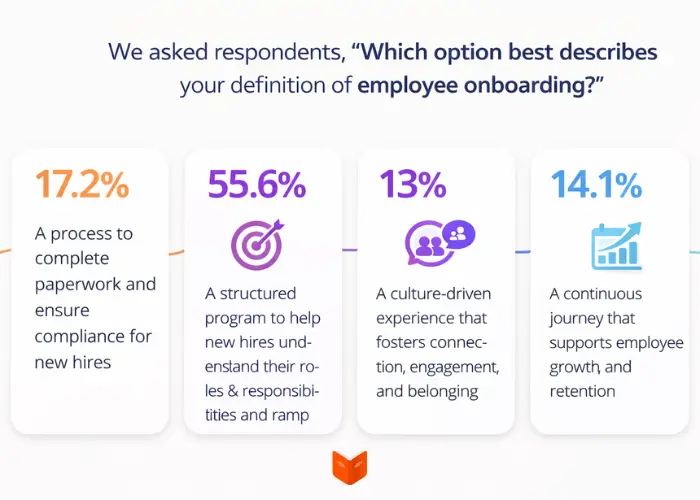
Starting work begins with steps carefully planned across several stages. A person joining a company moves toward fitting in – goals, values, tools, how results happen – all part of that shift.
Starting off differently than orientation does, onboarding keeps going long after hiring ends. From the moment someone accepts an offer, it builds them up toward real job confidence. Learning happens here, yet so does fitting in, lining up with team goals, and getting regular check-ins.
A strong onboarding setup meets each new employee’s needs by covering what matters most right from day one:
- That’s what I’m figuring out.
- What does it take to handle my role well around here?
- Who do I work with and rely on?
- What part do I play in helping the company reach its objectives?
When onboarding feels like an actual strategy, companies often notice real gains in involvement, performance, and people staying longer.
Benefits of an Effective Employee Onboarding Process
Enhance Employee Satisfaction and Performance
What stands in the way of solid results at first? A well-built onboarding process cuts through confusion. It spells out tasks, focus areas, and what winning looks like – right from the start.
New hires get it when they see:
- What “good performance” looks like
- How decisions are made
- Where to find information and support
Confidence builds quicker when new hires learn through guided steps, cutting down errors that drain resources. Instead of relying on guesses, organizations shape onboarding around actual tasks, turning incomplete beliefs into clear facts. What sticks is what works during moments of truth – practice matters most where it counts.
What stands out is how this simplicity boosts learning speed, strengthens initial results, then pulls people deeper into the experience.
Reduce Turnover and Improve Workplace Culture
Most who leave early do so because promises weren’t kept, not because they lacked skill. When hiring fails, people show up unsure, alone, or out of step with how things really work.
A strong employee onboarding program builds trust early by:
- Truthfully sharing what’s expected
- Starting off by showing cultural norms and values in a straightforward way
- Introduction to corporate learning methods
- Compliance training
- Encouraging open communication and feedback
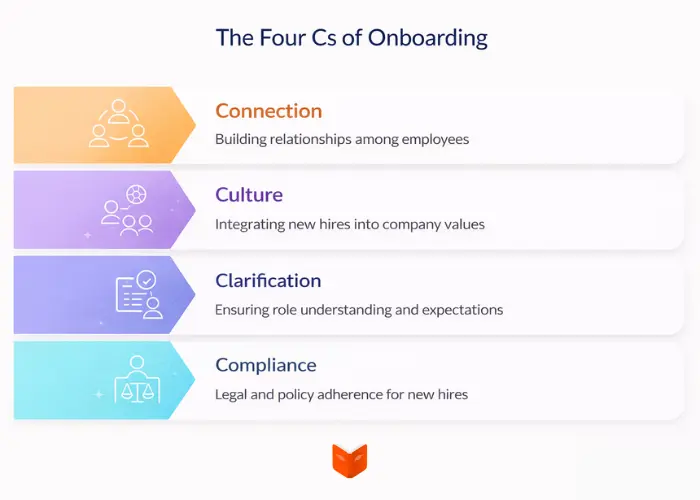
When people fit in, trust grows along with their connection to others. Belonging sets in quietly, shaping how workers stay and act over time.
Key Components of Employee Onboarding
Pre-onboarding
Once someone accepts the offer, things start moving forward before they actually start work. This early process helps lower stress while keeping the first few days from feeling like lost hours.
Before anyone starts, getting things right matters:
- A clear new hire checklist
- Access to key documents and systems
- An overview of the first 30-90 days
- Introductory materials about the company and role
Before starting work, efforts make first days about getting familiar and building relationships instead of dealing with paperwork delays.
Personalization
One size never fits all when it comes to onboarding people differently based on job type, level, or team. What matters is tailoring things so they actually connect.
Role-based onboarding plans adjust:
- Training depth and pace
- Learning formats
- Stakeholder introductions
One size never fits all, yet it’s crucial for tech jobs, leaders, or teams that span fields – each has distinct needs and rhythms.
Social Media Research
A few groups lean on minimal social media checks to grasp how people talk and what they care about workwise. Applied fairly, such findings let leaders shape talks, guidance methods, and connection habits – never stepping into personal space.
Company Culture Immersion
Folks pick up workplace habits by watching others, never just reading mission statements. Good hiring checks help clear rules become visible to new staff.
Culture immersion includes:
- How decisions are made
- How feedback is given
- How collaboration actually works
- What actions get praise or silence?
What helps is cutting out delays, so confusion from different ways of doing things shows up sooner rather than later.
Steps to Create an Effective Employee Onboarding Process
Determine What New Hires Need to Know
Begin by outlining main subject categories:
- Role duties along with expected outcomes
- Tools, systems, and workflows
- Compliance and safety requirements
- Communication and escalation paths
This keeps things clear rather than cluttered yet still catches what matters most.
Outline Logistical Requirements
Getting things done fast means organizing how jobs like onboarding, setting up logins, or handling rules pop up at set times.
When logistics go unhandled, work slows down and staff grow weary. Switching routine jobs to machines? That cuts mistakes – keeps flow steady, also lets HR, those who lead teams, spend time where it counts.
Determine Who New Hires Should Meet
Relationships matter when people start new jobs. Introducing them at the right moment connects them to others in meaningful ways.
- People who report to their managers
- Key collaborators
- Mentors or onboarding buddies
Links show how things depend on each other, making teamwork move faster between groups.
Create an Employee Onboarding Timeline
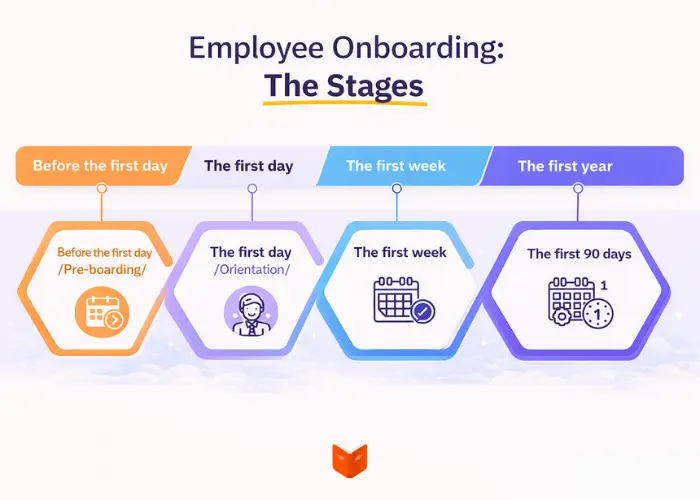
A solid onboarding process doesn’t hurry by hour. It builds slowly, shaping weeks into lasting results.
Usually it moves like this:
- First week: Orientation, tools, basic training
- In the first month: being fully competent matters most. What counts is knowing how things work – right from the start.
- 60-90 days: Independent contribution and feedback
- 90 days-ongoing: Measuring performance and reporting
Starting slow helps the worker pick up new skills without getting stuck.
What Makes a Successful Employee Onboarding Program?
Successful onboarding programs share five characteristics:
- Clarity expectations roles goals are explicit
- Every worker gets a steady starting point, nothing changes without reason
- Manager Involvement – Managers actively coach and support
- Feedback Loops – Regular check-ins identify gaps early
- From day one, how people join shifts alongside the company’s growth
As things change, so does getting new team members started. When onboarding feels like part of how things naturally grow, companies shift into high gear quicker.
How to Measure Employee Onboarding Success
Figuring out how well people onboard isn’t just about checking results – it pushes teams to take responsibility and keep getting better.
What we track matters most:
- Time-to-productivity
- Early performance indicators
- Staff involvement levels
- Retention rates within the first year
- Onboarding feedback surveys
A full picture of onboarding effects emerges when quantitative data meets qualitative feedback.
Examples of Effective Employee Onboarding Programs
- Welcome gifts reinforce belonging and appreciation
- When new hires take part in real-life policy exercises, they tend to stay longer and follow rules better. Learning by doing makes a difference.
- Right off, welcome messages help people link in fast.
- Onboarding buddy programs provide informal guidance
- Seeing a product up close helps people grasp what it does. Trying it out makes things clearer. A live example shows features more easily than words alone.
- Informal team chats support social integration
Every piece builds on quick involvement, cutting down loneliness.
Tools to Use to Develop an Employee Onboarding Plan
Onboarding at scale works better when the right systems are used.
Common solutions include:
- Learning management systems for onboarding training programs
- HR platforms for documentation and compliance
- Task management tools for onboarding workflows
- Communication platforms for collaboration
- Knowledge bases for self-service learning
Some companies handle onboarding through systems such as a WordPress LMS plugin used for workplace lessons, where extra functionality helps guide steps and monitor individual growth.
Conclusion
Onboarding workers sets the stage for how well they do later. When companies plan these steps carefully, things become clearer, safer, and workers start helping sooner.
Using shape, one-on-one touches, responses, along with suitable resources, businesses shift onboarding from routine to strength – a move that lifts lasting performance and worker progress.
FAQ
Why is employee onboarding important?
It boosts productivity, cuts initial employee exits, while fitting people into roles matching company values and goals.
What determines how long onboarding should take?
Lasting results usually show up between thirty and ninety days, based on how demanding the job is.
What is included in an onboarding plan?
Starting off with training, then records, followed by meet-the-team moments, after that clear roles and standards, then steady check-ins shaping how things go.
Who holds control over the onboarding process?
Nowhere does power shift so clearly – HR shapes the plan, managers carry it forward, while leaders stand behind it.
What if onboarding actually helped people learn their roles?
Measuring results helps. Getting feedback along the way matters too. Adjusting how things are shared and delivered never stops.Tools helping new hires get started include platforms for digital contracts, learning checks, and communication alerts.
LMS platforms, HR systems, communication tools, and centralized knowledge bases.