Every day brings new learning on the job – through classes, setup walks, group talks, or doing tasks yourself. Still, knowing stuff isn’t enough if you cannot recall it later. Sticking with lessons matters most when real outcomes show up weeks or months down the line.
What people learn sticks better when they can really use it. Workers who keep facts in mind make choices with steadier hands, tackle issues quicker, while shifting to new situations without mistakes. Mixed with smart ways to share awareness, retention lifts teamwork and output simply by making connections easier.
This piece dives into knowledge retention – what it means, its importance, challenges associated with it, along with effective approaches firms might adopt to help workers maintain and build skills over time.
What Is Knowledge Retention?
What people learn stays with them when they can save it, bring it back later, then put it into practice. At work, this looks like staff applying knowledge several days, weeks, or even months following training sessions.
What keeps people around isn’t just learning details. It’s more like:
- Putting knowledge into practice on actual tasks
- Starting fresh with familiar abilities.
- Building on existing learning over time
Employees keeping knowledge turns learning into growth, less like constant relearning.
Benefits of Knowledge Retention
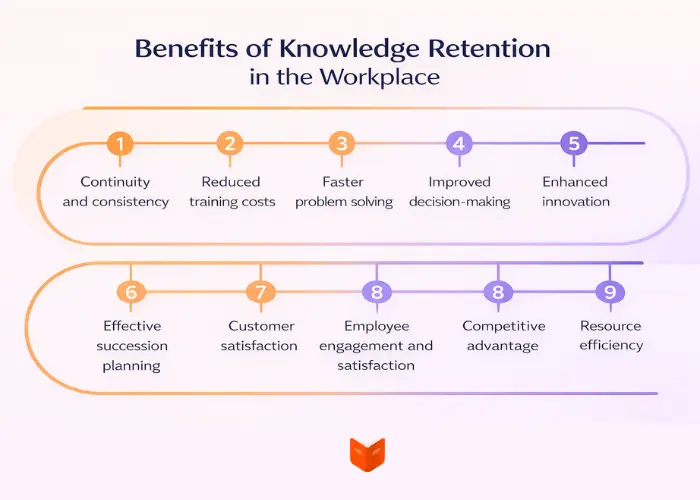
When companies make learning stick, benefits show up fast:
- With improved skills, workers handle tasks correctly and reliably over time
- Faster onboarding: New hires reach productivity sooner
- What sticks around helps choices get sharper. Learning over time shapes how sure you feel about what to do
- Higher return on training investment: Learning produces long-term value
Most of what was learned now stays put. Instead of walking out the door, key abilities remain inside the company.
When retention works well, it turns training from just another cost into something useful for long-term gain.
The Importance of Knowledge Retention
Racing to deliver course material might feel urgent, yet hurting into it often misses the mark. When learners forget what they learned, progress stops – knowledge stays on paper, unused by real-world choices.
Knowledge retention is important because it:
- Links learning to actual results
- Adapting workaday know-how to fresh hurdles becomes easier when people learn how to shift their thinking during tough shifts.
- Keep know-how alive when team structures shift.
- Sticking with it helps people grow their skills. When teams stay committed, things keep moving forward without breaks.
Why Is Knowledge Retention Difficult?
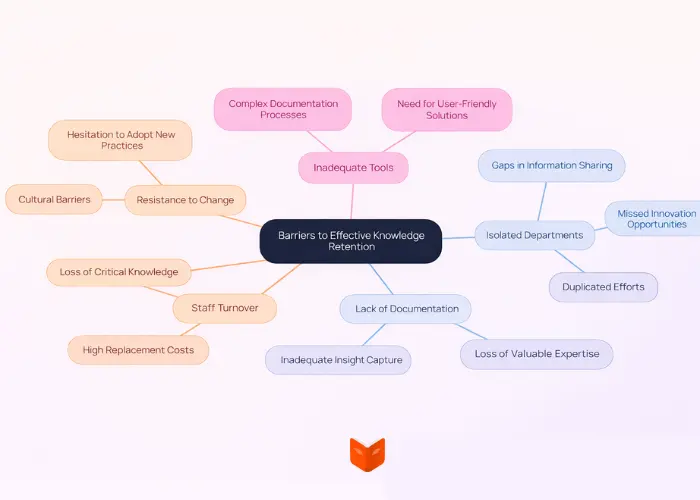
It’s tough to hold on to facts, particularly now that we spend so much time at our jobs.
Too much info at once
One moment might bring many messages. If someone sees far too many things at the same time, it gets difficult to tell which parts matter. That confusion? It weakens how much they’re able to keep learning.
Ineffective learning methods
Most one-time workshops plus silent talks fail to help people keep what they learn. When there is no engagement or later review, fresh ideas vanish fast.
Cognitive overload
Poorly organized or overly complex material places excessive demands on mental processing. This reduces understanding and weakens learning retention.
Low engagement
Learners lose interest once they fail to connect with what’s taught or spot no link to daily jobs. Motivation slips under those conditions. Memory fades even faster as distance grows.
The Forgetting Curve
What sticks? Not much, if you do nothing after learning. Studies by Hermann Ebbinghaus revealed rapid forgetting – most facts fade fast. Revisiting or using what was taught slows that drop. Without effort, memories vanish quicker than expected.
Key implications mean:
- What slips away does so fast, without warning. Memory fades fast, like morning mist.
- Reviewing content slows memory loss
- Repeating tasks helps keep them in memory longer
That graph shows how crucial support is when workers learn on the job.
Cognitive Principles of Knowledge Retention
Several well-established cognitive learning principles explain how to improve memory retention:
- Going over the same details again helps lock them into memory
- Repeating knowledge by thinking about it helps keep it longer than just reading the same thing again.
- Reinforcement: Applying learning makes it stick
- Learning when it connects to actual goals makes remembering simpler
What holds knowledge together shapes how workplaces keep it steady. In different fields, these ideas lead people to store what matters.
The Neuroscience of Knowledge Retention
When we learn something, brain changes happen for real. Every time we remember or use new facts, brain pathways grow more solid.
Retention gets better in these situations:
- Spreading lessons out across days
- Information is actively retrieved
- People apply what they know in everyday situations
When learning stops, brain paths fade. Without repeated effort, memories grow distant. That is why doing it again becomes essential.
5 Ways to Enhance Knowledge Retention
Use spaced learning
Scattered study breaks give the mind time to lock things in place. Instead of cramming everything at once, spreading effort strengthens recall much better. Waiting between lessons makes memories stick tighter than dense sessions ever could.
Maintain a culture of continuous learning
Learning never stops, so ideas stick better on their own. Workers keep what they learn when they keep exploring new ways. Adapting gets easier if there is always something fresh to discover.
Gamify knowledge sharing and retention
Playing little games and adding gamification to training makes things more exciting by adding tasks, visual steps, also prizes. When people pay closer attention, they tend to remember details more clearly.
Choose the right learning platforms
Content gets sorted through these tools, while repeated learning sticks around longer. Progress shows up clearly when systems are well laid out.
Trying things out
Repeating small tests often builds long-term recall and real-world skill. Tools like quizzes or case studies help sharpen memory through practice.
Knowledge Retention for Enterprises
Every now and then, companies find ways to keep knowledge alive through routine practices. They slip it into regular training routines instead of treating it like a one-time task. Sometimes, they weave review sessions into ongoing work cycles. Results often show up when learning becomes part of everyday activity.
Key approaches include:
- Structuring training with follow-up and reinforcement
- Using LMS tools to monitor progress and retention
- People helping each other learn and share what they know
- Aligning training with actual job responsibilities
Seeing retention as something that unfolds over time lets learning take shape in real ways. What sticks can actually be tracked. Growth then builds slowly, without rushing.
When it comes to understanding how people learn and remember, trusted advice often comes from universities and career development centers. These places help sort out what really works in holding onto information.
Conclusion
What sticks around matters most after training ends. When people work, keeping facts on hand shapes how much gets done, how skills grow, whether teams stay in sync.
Figuring out memory helps groups make training stick. Over time, people learn faster if they share and retain info well. Teams that do this see real gains in results.
FAQ
Retention of knowledge at work. What does it entail?
Remembering what you have been taught matters here. Staying able to use and share knowledge later on counts too.
Why is learning retention important for organizations?
Learning alone won’t stick without follow-up actions. What happens after training shapes results.
How can employees retain information more effectively?
Spaced out sessions help you recall more. Pulling memories forward works better when revisited. Doing tasks again and again strengthens what sticks.
What causes poor knowledge retention?
Most people face too much info these days, yet they rarely get truly involved, instead sticking to mindless scrolling or surface-level reading without ever checking in later to see what stuck.
What happens when teams keep what they learn?
Outcomes shift – results grow. When people stick around, results improve – less mistakes happen, training pays off more. Retention matters because it shapes actual outcomes.