It’s fascinating to see how times have shifted. Not long ago businesses viewed workforce development as a task to tackle only when they “eventually found the time.” Nowadays it’s among the priorities organizations consider when planning for sustained competitiveness. Frankly, with teams, ongoing technological advancements and rapidly changing roles this approach is logical. Without learning, companies won’t be able to stay ahead.
This is where digital training platforms play a role. They essentially power the process of learning but selecting the appropriate platform becomes easier once you grasp how corporate education functions within a company. And why certain methods are more effective than others.
Key Takeaways
- Businesses depend on education to remain adaptable when the market changes.
- Robust L&D frameworks aid in employee retention. Enhance team communication and cooperation.
- Learning is most effective when it is ongoing and connected to work rather, than something employees “check in on” once annually.
- An environment that fosters independence, variety and mental security enhances the effectiveness of learning.
- When picking an online training platform, focus on ease of use, analytics, scalability, and content flexibility, not just flashy features.
What Is Corporate Learning?
Corporate learning fundamentally refers to the effort to support employee development enabling them to handle new and increasingly challenging tasks. It’s more than classes. It encompasses everything: organized programs, leadership development tracks, mentoring, coaching and the immediate, on-the-spot training we rely on throughout the workday.
The term ” education” might seem formal yet the concept is quite practical. Ensuring employees continue to learn so the company stays competitive. Work evolves often more rapidly than expected and employees require training that adapts alongside their roles. Digital learning ecosystems enable this particularly when the underlying platform is selected with care.
The Importance of Corporate Learning and Development
An effective learning and development plan goes beyond merely scheduling training sessions. It impacts the speed at which teams adjust the confidence employees have in their positions and the organizations overall capability to manage change.
When organizations genuinely invest in L&D they typically observe enhancements in:
- overall productivity
- decision-making quality
- employee satisfaction
- long-term performance
With AI-driven personalization and competency-based education defining the future of workplace learning. Those companies establishing a base today will gain a significant edge in the future. This type of investment yields returns, not a single payoff.
Benefits of Corporate Learning in the Workplace
When educational programs are available, well-organized and significant they bring about a change in the way individuals operate.
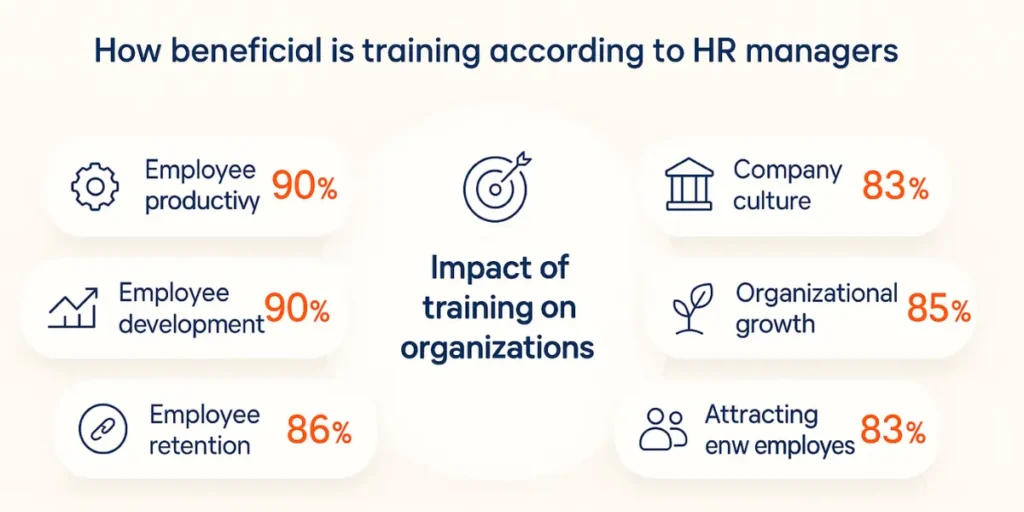
Actualize individual growth
All employees desire growth. This is a truth. Transparent development routes assist them in grasping their direction. The abilities required to reach their goals.
Engage remote teams
Remote teams frequently face challenges with alignment. Common learning experiences assist in restoring that bond. When all members use the knowledge language ” teamwork becomes more seamless.
Minimize skills gap
Technologies evolve, responsibilities. Whole sectors overhaul their practices. Ongoing education ensures companies do not lag behind without noticing it.
Reduce employee turnover
Employees seldom depart when they experience support and recognize chances for development. A robust L&D program ranks among the effective retention strategies a business can employ (yet many companies don’t capitalize on it fully).
Cultivate leaders of building an excellent culture
Leadership isn’t something that emerges spontaneously. It is cultivated. Instruction, in communication, emotional intelligence and decision-making forms leaders who enhance rather than deplete the culture.
Improve mental fitness
When workers believe they are competent and up-to-date, with their abilities they approach obstacles with assurance. Acquiring knowledge inherently boosts resilience. Lessens stress.
Challenges of Corporate Training
Any organization that has attempted to develop a learning program understands that the process is rarely seamless. Several obstacles tend to arise consistently.
Employee retention
Individuals lose drive when they fail to recognize how training links to their advancement. Employee retention increases when training is perceived as a growth opportunity rather, than a sporadic task.
Employee engagement in training
Let’s face it. Boring material and complicated tools destroy engagement away. Employees seek training that’s meaningful, engaging and valuable, to their time.
Creating a learning culture
A culture of learning functions only when leaders are involved and employees feel encouraged. Lacking this base training becomes an “additional chore” rather than an inherent aspect of work.
Corporate training budget
Educational courses can quickly become costly. The best strategy for staff training budget is opting for scalable options that provide quantifiable outcomes. It’s not about investing more. It’s about investing.
Corporate Learning Strategies
An effective learning approach combines organization with adaptability. It avoids mimicking all trends. It develops based on how individuals genuinely acquire knowledge in the workplace.
Learning strategy aligned with business goals
Training must align with business priorities. This involves identifying skills, establishing quantifiable goals and utilizing data to assess if the programs are effective.
Continuous learning
Brief sessions. Regular guidance. Chances to apply skills. These basic components integrate learning into the workday rather than keeping it apart.
Updated coaching and mentoring programs
Individuals absorb knowledge rapidly when led by experts who have already perfected the role. Guidance and mentorship swift hands-on development that structured training cannot match.
Knowledge-sharing initiatives
Organizations possess an amount of internal expertise. When staff members exchange their insights, via presentations, written materials or casual meetings—teams achieve better cohesion.
Skills-based hiring and learning
A growing number of companies are moving toward recruiting based on skills, rather than job titles. This change necessitates training programs that enable employees to develop competencies they can use immediately.
Diversity
Diverse backgrounds and experiences enhance the journey. Variety fosters discussions and more innovative solutions.
Psychological safety
Workers acquire knowledge quickly when they feel secure to inquire and share ideas without apprehension of criticism.
Autonomy
When workers have the freedom to decide what to study and the method of learning their engagement significantly increases. Individuals appreciate having authority over their growth.
Experimentation
Innovation flourishes when groups feel at ease exploring ideas. Trying things out promotes inquisitiveness and ongoing progress.
Rewards
Acknowledgment sustains learning. Credentials, badges and brief public acknowledgments encourage employees to remain involved.
How to Choose the Right Online Training Platform
When you grasp how learning functions, within your organization choosing the platform becomes more straightforward. The platform needs to back your learning approach. Not take its place.

Seek out tools that allow:
- ongoing learning
- personalized development paths
- detailed reporting
- diverse content types
- remote accessibility
- integration with HR and communication systems
Here’s a simple method to assess your choices.
- Ease of use
If the platform seems complicated employees are unlikely to adopt it. Clear user-friendly dashboard like FoxLMS always helps.
- Customization and content flexibility
Your organization will require formats with time. Videos, quizzes, SCORM packages, blended learning, cohort-based training. The platform must support every one of these.
With FoxLMS you can create all of the above.
- Analytics and reporting
Sound decisions depend on data. Analytics reveal where learners excel, where they face difficulties and the overall effectiveness of the program. With any tool you must be able to measure online course success.
- Scalability
Your team will. Your platform must scale accordingly without losing speed or adding complexity.
- Collaboration & engagement tools
Discussion forums, collaborative spaces and response cycles make education more interactive and communal.
- Cost efficiency
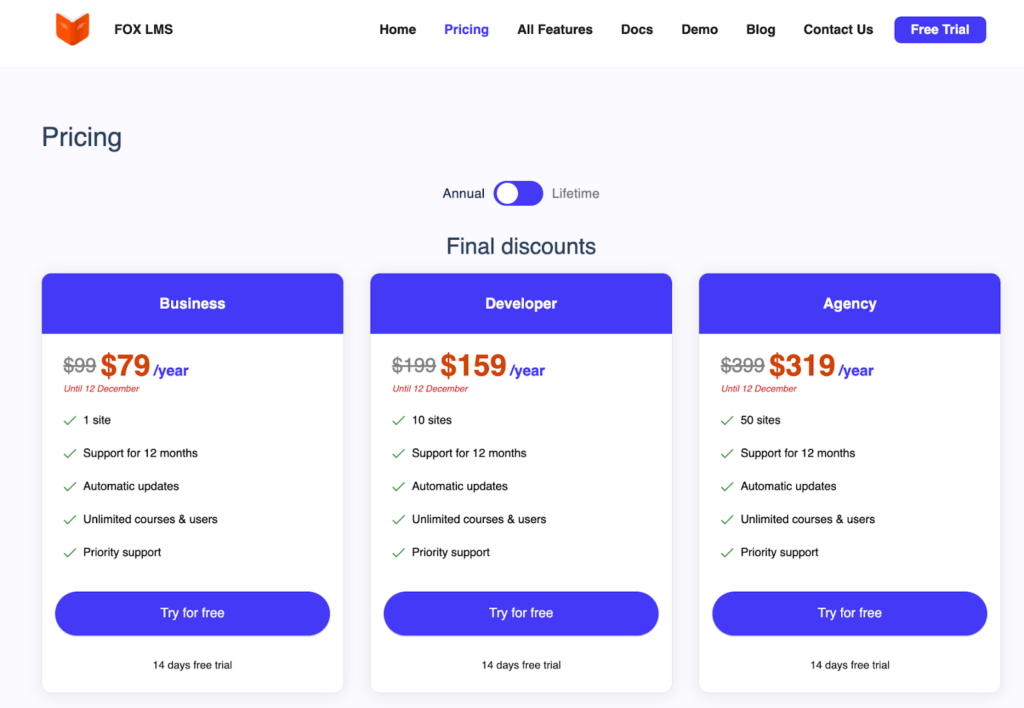
Seek pricing that aligns with both your requirements and your future training objectives.
Corporate education stands as one of the effective methods for organizations to grow internally. It enhances collaboration, lowers employee attrition and equips staff with the abilities required to perform at their level. When training aligns with company objectives and is backed by a culture businesses achieve a competitive advantage that is difficult to replicate.
Online training platforms make this possible by bringing learning to the center of the workplace. When you choose the right one, you create an environment where development feels natural, measurable, and truly empowering.
FAQ
Why is corporate learning so important today?
Because work changes constantly. People need to learn because tools, roles and expectations continue to change while their knowledge helps them maintain their position rather than losing their way.
Does corporate learning really affect retention?
Yes. The presence of career advancement possibilities makes employees want to continue working for the company. People tend to move away from stagnation instead of staying with their current organizations.
Does corporate learning work only for large corporations?
No. The advantage of smaller teams becomes more pronounced because team members must handle multiple responsibilities while they need to acquire new skills at a quicker pace.