Students who want to learn effectively need to understand these ten essential study techniques.
The process of effective studying requires students to use their study time efficiently rather than spending longer periods with their books open.
The key lies in your ability to make effective use of your existing time. Students and working professionals face challenges when they spend extended periods studying because these sessions create short-term productivity but result in weak memory retention and increased feelings of frustration.
The correct method of studying enables students to achieve better results through their ability to handle their work effectively.
What Are Study Skills?
Study skills represent the methods and practices which students use to better learn and maintain their acquired knowledge. The list includes planning, note-taking, time management, concentration and self-assessment.
People need to learn good study habits because these abilities do not come naturally to anyone. People learn these skills by doing them repeatedly while thinking about their actions. Students who study for equal periods will learn different amounts of material when one student possesses better study techniques.
Study skills determine how students approach their learning activities.
- Organize their study routine
- Engage with learning materials
- Process and remember information
- Prepare for exams or assessments
- Apply knowledge beyond memorization
Students who develop strong study skills achieve better learning results in their academic work, their professional development and their personal growth throughout their entire lives.
The Importance of Study Skills

Study skills determine the quality of learning because they affect how well students learn rather than how much they learn. They also make it easier to measure the learning progress effectively.
Students who lack proper study techniques tend to repeat their learning process by reading their notes again and marking important sections and studying at the last minute.
These methods which people use frequently do not help students remember information for extended periods or grasp its meaning.
Students who develop their study skills become better at learning.
- Learn more efficiently
- Reduce stress and overwhelm
- Improve academic or professional performance
- Build confidence and independence
- Share knowledge more effectively with others.
The ability to learn continuously requires students to develop effective study techniques which serve as their foundation for ongoing development.
How Can You Improve Your Study Skills?
Students need to recognize their current study habits before they can begin their improvement process. Students continue using their established study methods because they have not considered the effectiveness of these methods.

Improvement comes from:
- Reflecting on what helps you learn best
- Trying different study methods
- Adjusting routines based on results
- Focusing on understanding rather than memorization
The process of learning requires students to take an active role. The implementation of small modifications to your study routine including planning, review and testing methods will produce substantial improvements throughout your learning process. These also align closely with the principles of adult learning that’s about understanding, relevance, and self directions.
Top 10 Study Tips for Effective Learning
The following ten study tips help students maintain their focus while boosting their productivity and their ability to retain information for extended periods. These methods require more than temporary fixes because they function as useful practices which produce results through regular implementation.
- Create a Study Plan
A productive study plan provides structure, direction. Students who lack a study guide must learn through deadline-based work instead of developing their knowledge base.
A good study plan outlines:
- What you need to study
- When you’ll study it
- How much time each topic requires
Planning helps students avoid decision fatigue because it enables them to create a study schedule which prevents them from using last-minute cramming as their only study method.
2. Set Up a Productive Study Space
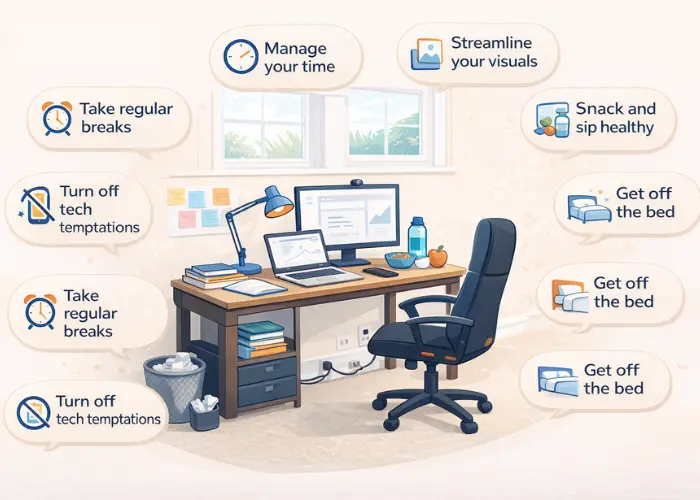
Your productive study environment creates a greater impact on your ability to focus than you would probably realize. A study area which produces results helps students stay away from interruptions while showing their mind that it needs to concentrate.
Choose a space with:
- Comfortable seating
- Good lighting
The environment should maintain complete silence while students face no disruptions.
The practice of maintaining consistent behavior holds importance. Studying at one specific location helps students develop their ability to stay focused while following a regular study schedule.
3. Talk to the Teacher and Ask Questions
Students face difficulties in learning which could be resolved through clarification before they waste multiple hours on incorrect understanding. The ability to ask questions represents a fundamental academic skill which students should develop.
Engaging with instructors helps you:
- Resolve misunderstandings early
- Gain context beyond textbooks
- Learn what matters most
The exchange between students creates two benefits which enhance their classroom involvement while making their educational experience more substantial.
4. Take Notes (With Purpose)
The most effective note-taking method requires active participation instead of performing routine tasks. The practice of writing down all spoken words without modification results in minimal mental engagement.
Instead, focus on:
- Key ideas and concepts
- Relationships between topics
- Questions or uncertainties
The organization of notes enables students to review their work while they reflect on what they learned and share their knowledge with others in the future.
5. Find Your Study Partner or Join a Study Group
Learning doesn’t have to be solitary. A study partner or study group introduces accountability and new perspectives. It also supports motivation based on social learning approaches.
Studying with others can help you:
- Explain concepts out loud.
- Identify gaps in understanding
- Stay motivated
The main requirement for success involves achieving balance between different elements. Study groups achieve their best results through dedicated work that maintains both concentration and purposeful direction.
6. Teach Other People
Teaching stands as an optimal learning approach which proves to be highly effective. The process of explaining concepts to others requires you to structure your ideas into a clear order.
This approach:
- Reveals what you truly understand.
- Strengthens memory and comprehension
- Improves communication skills
The process of explaining concepts to others helps students develop their learning abilities.
7. Get Some Exercise
Physical movement supports mental performance. Physical exercise on a regular basis leads to better concentration abilities, improved memory function and increased energy levels.
You don’t need intense workouts. Short walks, stretching, or light activity can:
- Reduce mental fatigue
- Improve focus during study sessions
- Support long-term productivity
Students need to develop healthy learning habits which reach beyond their classroom work.
8. Set Real Deadlines
Open-ended study goals often lead to procrastination. The establishment of specific and achievable deadlines helps people stay focused while building both speed and organization.
The process of dividing big work assignments into multiple achievable objectives enables you to:
- Track progress
- Avoid overwhelm
- Maintain consistency.
- Deadlines turn intentions into action.
9. Take Breaks
The human body needs rest periods to maintain its effectiveness when studying for extended durations. People experience a natural decrease in their ability to focus throughout time even
when they maintain strong motivation.
Short periods of regular rest time prove beneficial.
- Restore focus
- Prevent burnout
- Improve retention
The process of learning requires students to maintain high levels of effort while also getting enough rest time.
10. Test Yourself
Self-testing stands as the most dependable method which helps students enhance their learning process. The method requires students to actively remember information instead of simply reading through their notes.
Testing yourself:
- Reveals gaps in understanding
- Strengthens memory
- Builds confidence before exams
The process of memory consolidation receives support from three learning methods which
include practice questions and summaries and the act of explaining information from memory.
Conclusion
Students who want to learn effectively need to develop specific study routines instead of depending on their natural abilities. Students who develop strong study skills learn to manage their time better which results in lower stress levels and improved academic performance.
Students who follow practical study tips which include planning, active participation, teamwork and self-assessment activities will develop learning patterns which help them learn better and share their knowledge effectively.
The development of these study habits enables students to handle their work better while gaining deeper understanding from their studies.
FAQ
How can I improve my study skills?
Students who want to enhance their study abilities should try various learning approaches while they identify their most effective methods and they should concentrate on grasping material instead of simply remembering it.
Is studying with a study partner effective?
Study partners help students maintain their motivation and accountability while improving their understanding when they stay concentrated during their study time together.
How long should a study session be?
Study sessions achieve their best results through the combination of learning time with scheduled rest periods. Students achieve their best results through studying 45-60 minutes at a time before they take a brief interruption.
Why is self-testing important for learning?
Self-testing helps people improve their memory skills while showing them their knowledge weaknesses which leads to better retention of information over time.