Inside today’s companies, an edge isn’t built by gear, money, or tech power only. Instead, it flows from where knowledge goes: who sees it, who shares it fast, then whether people actually use it where it counts.
Even though people talk about sharing knowledge at work, it rarely gets an honest description. Implementation? Almost never happens. Most firms mix it up with filing papers or creating folders everyone can access. Truth is, sharing knowledge isn’t about files – it’s part of how organizations function, hidden beneath everyday actions.
Done well, it cuts onboarding hours, stops expertise from vanishing, helps better choices, fuels staff loyalty.
Why Knowledge Sharing Is a Critical Business Asset
Knowledge shapes how we work today. Not daily routines but decisions, insight, and handling challenges bring real worth from people.
When knowledge moves without limits, groups gain in noticeable ways. Though often unseen, these advantages shape how companies grow.
- Faster than before, workers now spot answers quickly, bypassing long searches through messages, conversations, or stacked files.
- When everyone follows the same logic, choices line up without confusion.
- When employees move on or take new positions, what they know stays behind. That insight does not go with them.
- When people learn while doing their jobs, growth happens quicker. Learning sticks around because it lives right inside the daily flow.
Common Problems Companies Face
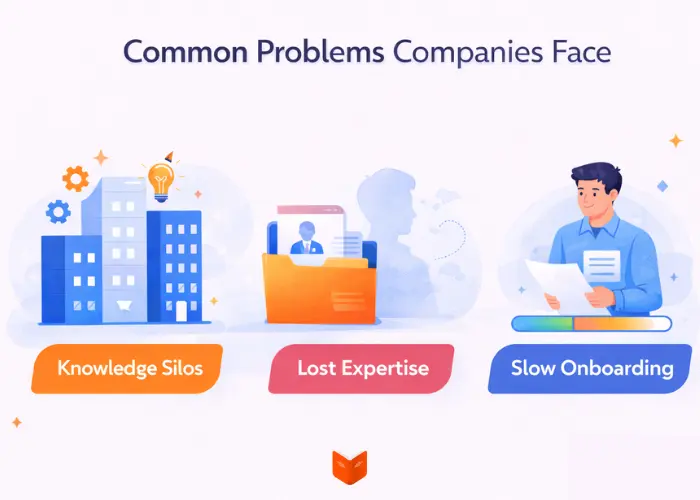
Even when people mean well, getting knowledge around often gets stuck inside companies – weak setups plus human habits block the way.
Knowledge Silos
Fragments of knowledge hide inside separate corners of the organization, never quite reaching where they could be used. Because of this, effort gets repeated while useful patterns go unseen.
Lost Expertise
If senior staff leave or shift positions, what they know quietly – how things truly run – tends to vanish too.
Slow Onboarding
Fresh faces run into extra hurdles where company wisdom sits only in minds, not in reachable tools. Onboarding struggles hit hard – slowing how fast they get up to speed.
How Structured Knowledge Sharing Supports Growth, Productivity, and Learning
When workers need info, it now comes their way without delay. Rather than hunting coworkers online, they find what they seek right when it matters. Tools deliver insight quietly, like background support. Learning becomes something always on, never just triggered later.
This method:
- Searching slows down when tools help find things fast. With right info at fingertips, less hunting happens naturally.
- Working better together across teams improves results.
- Turns individual expertise into organizational intelligence
What Is Knowledge Sharing?
Sharing what you know means deliberately passing along facts, skills, or lessons learned – so coworkers can do their jobs better.
What counts as shared knowledge depends on results – it must spark change, or nothing. Just because it’s recorded means little if it doesn’t shape anything new.
Types of Knowledge
Explicit Knowledge
Facts in written form make things clear. Take how manuals lay out steps – or when procedures get listed out. This shows what’s known in an organized way.
- SOPs and process documentation
- Training handbooks and support documents
- Internal policies
Knowing this gets simpler to record, yet it loses relevance fast if control slips, this method is called Explicit Knowledge.
Tacit Knowledge
What you learn by doing stays tied to that experience.
- The way a deal was won
- How a team solved a complex issue
- How decisions are really made
What lives beneath the surface stays difficult to write down, yet brings real worth.
Knowledge Sharing vs. Simple Information Sharing
What gets passed along is mostly about sending it out. What spreads is more about using it well.
A file sitting in a drive – that’s just data.
A fact that makes solving issues quicker? Knowing things does.
What makes this so important is also what people tend to miss.
The Knowledge Handshake Model (Original Framework)
Few groups see knowledge just as a stash to keep safe. Strong ones see it passed back and forth instead. That is where the Knowledge Handshake Model fits in.
A knowledge handshake occurs when:
- A genuine challenge at work shows up
- Inside the company, they found the necessary expertise
- Meaning moves through situations, shaped by where it appears
- Right away, the finding takes effect
- Performance gets better when that happens
Without one piece, sharing information falls apart. Just having a shared folder handles work just starting. Steps one and two sit inside a knowledge base. Sharing real knowledge wraps up everything nicely.
Here, knowledge sharing becomes active, part of ongoing processes instead of sitting still in archives.
Static Knowledge vs. Living Knowledge
Some groups keep using old information without realizing it.
Static knowledge:
- Companies keep them in folders
- Sometimes updated when time allows
- Rarely reused
- No feedback loop
Living knowledge:
- Something is pulled into daily tasks
- Always on the move forward
- Tied to others, shaping results
- Can be measured and improved
What shows up now in search results tends to favor active content creation, especially when sites adapt and build value over time.
Why Is Knowledge Sharing Important?
Prevents Knowledge Loss
When people move on, their knowledge doesn’t have to go with them. Shared methods keep it within reach.
Improves Decision-Making
Workers who can draw on earlier knowledge plus team experience tend to decide more quickly while doing it well.
Supports Continuous Learning
When people share what they know, class room lessons turn into continuous growth instead of one time shows.
One thing stands out after looking at companies such as Atlassian – when teams actually share what they know, cooperation sharpens while responses to shifts become quicker.
Who Should Participate in Knowledge Sharing?
Not everyone needs to handle knowledge sharing alone. Different people across teams are meant to take part.
- New hires
- People who already know their role well, often very skilled in specific areas
- Team leads and managers
- Cross-functional teams
- Leadership
Leaders showing up changes things – sharing ideas stops being a choice, becomes just part of how things move.
Benefits of Knowledge Sharing in the Workplace
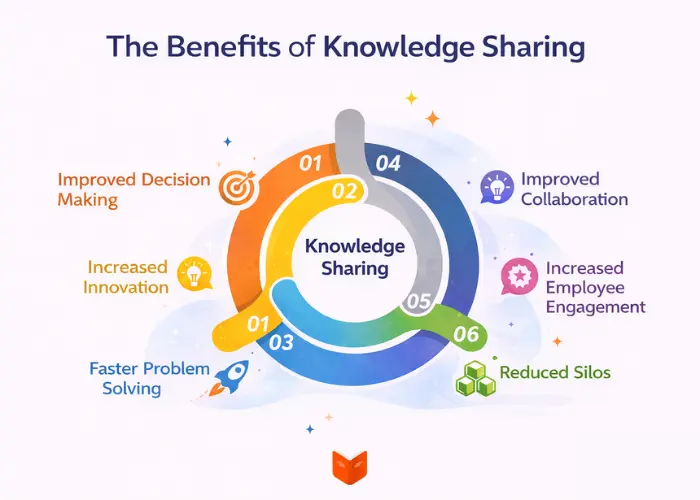
1. Easier and More Cost-Effective Recruiting
What people inside the company know matters more than finding job seekers who match every requirement.
2. Improved Employee Retention
People able to pick up tasks fast, share ideas, then grow into new roles often feel seen – and stay involved.
3. Higher Employee Engagement
Reaching out to coworkers builds closer ties and easier teamwork.
4. Increased Innovation
When people share what they know, fresh thoughts often show up across different teams.
5. Better Client Relationships
What everyone knows helps keep results steady and errors down. Mistakes happen less when shared info spreads across teams.
6. Thicker Paths Ahead Growth Opportunities
Workers start noticing what abilities count, also learning ways to build those strengths right within the company.
Why Knowledge Sharing Fails in Many Companies
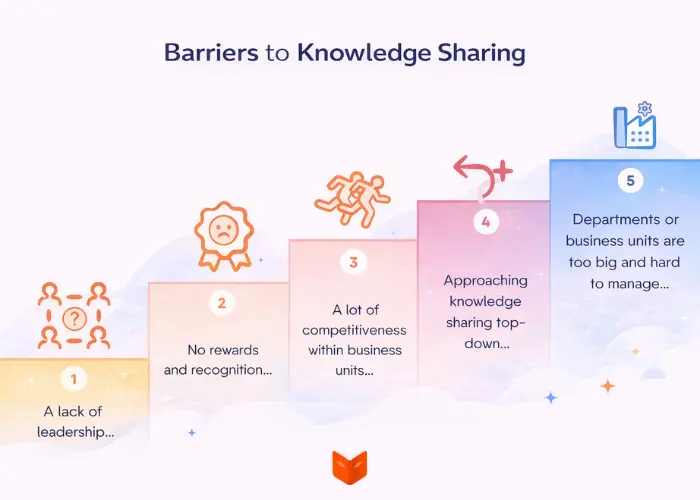
Common failure spots tend to show up here:
- Knowledge silos reinforced by structure
- Not run by a single authority or controlled in one place
- Over-reliance on chats and emails
- Lack of incentives or recognition
- Poor documentation habits
Looking at past conversations in places like Slack shows culture often blocks progress more than any tool ever could.
Knowledge Sharing Examples in the Workplace
Take these cases:
- Internal documentation and SOPs
- Internal training sessions were captured on record
- Project retrospectives and debriefs
- Best-practice libraries
- Expert-led knowledge sharing sessions
What works best gets woven into regular tasks, not left as an afterthought.
7 Steps to Improve Knowledge Sharing
1. Build a Knowledge-Sharing Culture
Support from leaders matters. A sense of safety in the workplace helps too. Being seen or acknowledged also plays a key role.
2. Define Clear Knowledge-Sharing Goals
Define how knowledge will flow. Set clear goals for sharing information.
Figure out which insights really count. Then see how they help achieve company goals.
3. Create a Central Knowledge Base
Set up a single source of truth, organized plainly and assigned clearly.
4. Encourage Knowledge Contribution Across Teams
Sharing becomes routine when it fits how people already interact. Not added later as something extra.
5. Create Regular Knowledge-Sharing Opportunities
Organize internal events like workshops, guest talks, or combined team meetings.
6. Use Technology to Support Knowledge Sharing
Use what you already use – LMS systems, teamwork apps, or short training snippets that slip into busy days naturally.
7. Establish a Formal Knowledge Management Process
Use smart tools to manage how things are made, checked, and handled across teams. A clear setup helps keep track of decisions.
Tools That Support Knowledge Sharing
Sharing knowledge works better when these factors are present:
- LMS systems manage digital learning environments
- Internal knowledge bases
- Collaboration tools
- Video and microlearning platforms
Today’s workplace training systems pack all those features into one tool.
How an LMS Improves Knowledge Sharing
A system like FoxLMS turns disconnected bits of information into something cohesive – structured learning – by offering features such as:
- Centralized access to knowledge
- Version control and updates
- Usage and engagement tracking
A good employee training setup makes knowing things part of the company’s growth, not just an individual effort. Check out our help resources on staff learning structures and workplace education tools for more details.
How to Measure Knowledge Sharing Success
Like signs show up:
- Knowledge usage and search behavior
- Content completion rates
- Reduced onboarding time
- Improved team performance
- Internal skill development
What gets tracked shapes how actions ripple back to intentions.
Conclusion
Sharing knowledge doesn’t come from single events or stacked files. Instead, it grows when human links meet practical use across living workflows.
When companies see knowledge as usable, trackable, and woven into routines, they grow quicker while shifting smoothly. Clear methods put insight where it can be seen, shared easily, and last over time.
When teams require flexible methods to encourage learning and communication, FoxLMS offers an organized space where information can be shared, tracked, and used longer term.
FAQ
What is knowledge sharing in the workplace?
Workplace knowledge flows in planned ways, moving insights, skills, and understanding between staff so tasks get better and choices strengthen. It counts as shared if it actually shapes daily efforts – not just saving or recording it.
Why do employees hesitate to share knowledge?
Sometimes people hold back information if busy, unsure they’ll get credit, worried about fading into the background, or just confused by how things work. If efforts to acknowledge shared insights fall short, workers tend to focus on personal results instead of building together.
How does knowledge sharing improve productivity?
When people share what they know, work moves faster because no one keeps reinventing the wheel or digging through old mistakes. Teams pull insights from others who’ve already figured things out, then slip those lessons right into their current jobs.
What role does leadership play in knowledge sharing?
A leader’s example shapes how people share knowledge. If leaders offer their thoughts, give credit where due, and help others feel safe speaking up, team members tend to join in more freely and keep sharing over time.
Can technology fix knowledge-sharing issues by itself?
Technology won’t fix knowledge-sharing issues by itself. Tools help, yet real solutions come from people, processes, and clear goals. Tools help us reach and keep information, yet trust, shared habits, and personal gain shape how people exchange ideas. Without daily ties to knowledge, even robust platforms fade into digital storage.