People now need to maintain their skills because work roles transform rapidly while education no longer serves as the final point for learning. People along with businesses need to maintain their ability to transform while they learn new skills and develop their capabilities.
The modern workplace determines learning processes through technological advancements and employees who work from home and experience frequent changes in their industrial environment.
New tools emerge, processes shift, and entire professions transform within a few years. The need for continuous skill development has evolved from being a competitive edge into an essential requirement which ensures professionals remain both relevant and able to find employment.
The reality of continuous change requires lifelong learning to provide education which people should pursue throughout their entire life span in their personal and professional environments.
What Is Lifelong Learning?
Definition
People who engage in lifelong learning pursue knowledge and skills by their own effort while they learn continuously from birth until death.
Learning occurs through formal education but also extends to work experiences, personal interests and daily life activities.
The approach of lifelong learning moves away from single-point qualifications because it teaches people to stay flexible while they learn new things and maintain their interest in knowledge acquisition throughout their entire life.
Different Forms of Lifelong Learning
The process of lifelong learning exists in different learning approaches.
- The education system provides formal learning opportunities through degree programs, certification programs and organized educational programs.
- People learn through informal experiences which include hands-on learning, working with others and watching others at work.
- Self-directed learning occurs when students take charge of their education because they want to achieve specific personal objectives or explore subjects that interest them.
The three forms of writing serve distinct purposes for skill development although they share common practices in their application.
Lifelong Learning vs Traditional Education
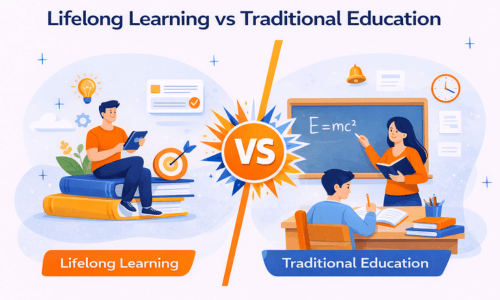
The traditional educational system operates through scheduled time periods which follow established learning programs.
The process of Lifelong learning continues indefinitely while it adapts to different situations. The system operates based on actual environmental transformations instead of following predetermined academic schedules.
Workplace vs Personal Development Contexts
The workplace focuses on professional skill development through lifelong learning which enables employees to enhance their performance and advance their careers.
The concept enables people to develop their creative abilities while building their self-assurance which results in achieving their life goals. These elements work together to create a system which will maintain its ability to adapt throughout extended periods.
Why Lifelong Learning Matters in Today’s World
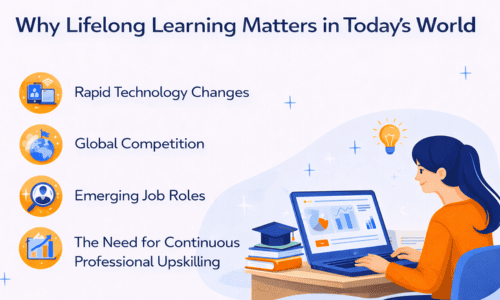
Rapid Technology Changes
The speed at which technology advances exceeds the ability of conventional educational institutions to adapt. Work operations transform through automation, artificial intelligence and digital tools which require employees to learn new skills permanently.
Global Competition
The modern workplace operates as a worldwide competition for skilled professionals who seek employment opportunities. Organizations and people who want to stay competitive need to keep learning because it helps them acquire skills which match worldwide standards.
Emerging Job Roles
The workforce now contains multiple positions which were nonexistent during the previous decade. People can move into different positions because of industry changes through lifelong learning which prevents them from being restricted by their previous skill set.
The Need for Continuous Professional Upskilling
The need for employees to acquire new skills has become essential. Organizations now require their staff members to develop their skills at the same pace as business expansion because lifelong learning has become essential for maintaining employment and achieving sustained work success.
Key Benefits of Lifelong Learning
Career Advancement and Adaptability
People who continue learning will develop skills which help them handle organizational changes while they become eligible for better career prospects which lead to higher positions in their field.
Skills for Changing Job Markets
People can maintain their employment skills through lifelong learning because their work duties change instead of needing to begin their career from scratch. The ability to adapt becomes essential for businesses operating in industries that experience rapid change.
Increased Confidence and Motivation
The acquisition of new abilities helps people develop self-assurance while they experience continuous advancement. People who keep learning tend to stay motivated and involved in their professional activities.
Mental Agility and Brain Health
The brain stays active and challenged through ongoing learning which enables cognitive flexibility and problem-solving and maintains long-term mental health.
Broader Personal Fulfilment
The practice of lifelong learning provides people with career advantages while it helps them develop curiosity and creativity which leads to personal fulfillment and better life satisfaction.
Lifelong Learning in the Workplace
Organizations now understand that learning activities create a direct connection between employee performance and their ability to stay with the company. Companies that invest in lifelong learning develop teams which demonstrate both resilience and adaptability.
A learning culture which is strong enables employees to move within the organization while it decreases employee departure rates and helps staff members develop their skills for internal advancement.
The practice of continuous learning enables organizations to achieve better performance because their staff members acquire essential competencies which enable them to operate effectively while creating new solutions and learning about modern equipment and operational systems.
Types of Lifelong Learning Activities
Online Courses and LMS
Online courses and learning management systems enable organizations to deliver structured learning programs which scale up to meet individual and organizational objectives. The tools work best for teams who operate from different locations.
Certifications
Certifications validate skills and knowledge through official recognition which helps professionals advance their careers while meeting their organizational compliance needs.
Microlearning
The learning system through its short focused modules enables students to develop their abilities step by step while maintaining their regular work activities.
Workshops and Seminars
The interactive nature of live workshops enables participants to engage with each other through discussions while receiving immediate feedback which helps them learn better.
Self-Directed Learning
Self-directed learning enables people to control their learning process by following their individual objectives for development.
Peer-Learning
The process of learning from colleagues through mentoring and collaboration and knowledge sharing helps both our professional abilities and our working connections.
Informal Skill-Building
People develop useful skills through their hands-on experience with tools and their attempts to resolve actual problems.
How to Start Practicing Lifelong Learning
Identify Learning Goals
Students who set clear goals will direct their work toward specific targets while using these targets to track their advancement throughout the learning process.
Choose Learning Methods
The achievement of various objectives demands unique approaches. The development of certain skills requires formal education but other skills need hands-on experience to learn.
Commit to Continuous Improvement
The level of consistency in performance delivery stands as more important than the amount of force applied. Small, regular learning efforts lead to long-term growth.
Use Learning Platforms and Communities
Learning platforms and communities create social learning environments, resources, and accountability which enables learners to maintain their engagement throughout extended periods.
Track Progress
The process of tracking certifications and badges and finished projects enables students to maintain their motivation while showing actual achievement results.
What Skills Are Most in Demand?
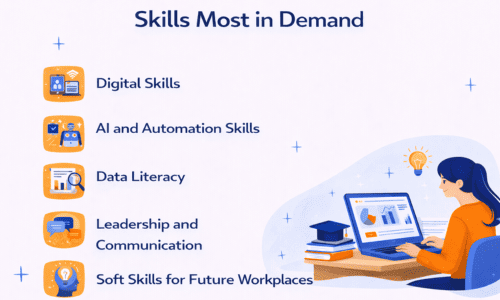
Digital Skills
Digital literacy serves as a fundamental requirement which all industries need for their operation of basic tools and their use of complex platforms.
AI and Automation Skills
The ability to recognize AI and automation impacts on work operations has become essential for all professionals who work in various business sectors.
Data Literacy
The ability to interpret and use data enables organizations to make better decisions which results in enhanced operational performance.
Leadership and Communication
The ability to lead effectively and communicate properly stands as a fundamental requirement for working in complicated team-based settings.
Soft Skills for Future Workplaces
The three essential competencies which will lead to enduring success in workplaces that transform include adaptability, critical thinking and teamwork, which are all considered as soft skills.
How Technology Supports Lifelong Learning
LMS Platforms
Learning management systems function as central hubs which unite training content while monitoring student advancement and enabling organizations to deliver their learning programs at any scale. Make sure to find a reliable LMS platform.
Mobile Learning
The ability to learn through mobile devices allows students to access education at any time and from any location which helps them maintain flexibility and continue their learning process.
AI Personalization
AI-driven personalization enables learners to follow customized learning paths which are based on their learning objectives and their current level of understanding and their remaining knowledge deficits.
On-Demand Learning Resources
People can now access information through on-demand learning at any time they require it.
Corporate Learning Systems
Organizations that implement integrated corporate learning systems use these systems to link their learning programs with their business targets and their performance targets.
Conclusion
The need for continuous learning has become an essential requirement for everyone. Organizations need this fundamental requirement to handle ongoing changes which affect their people and their teams and their entire structure.
The practice of continuous skill development through lifelong learning enables people to develop resilience and adaptability which leads to their long-term professional development. The system allows professionals to stay important in their work while organizations maintain their ability to perform and create new ideas.
The intentional practice of lifelong learning creates a strong force which leads to career advancement and individual growth.
FAQ
What is lifelong learning?
People who practice lifelong learning actively seek knowledge and skills which they need to succeed in their work and personal life throughout their entire existence.
Why is lifelong learning important today?
The fast pace of technological advancement together with shifting work responsibilities requires employees to learn continuously for maintaining their ability to work in the future.
Can lifelong learning be self-directed?
Yes. Self-directed learning activities for lifelong development follow personal and professional objectives which students use to guide their learning process.
Does lifelong learning maintain its value throughout every phase of a person’s professional development?
Yes. Lifelong learning provides advantages to all professionals who work at any stage of their career from their first job to their leadership positions.