Organizations now use employee collaboration as their main approach to learning instead of depending on traditional formal training programs and top-down instruction methods.
The modern workplace experiences rapid knowledge changes because team members now store this information instead of using traditional training manuals.
Companies can access their internal knowledge base through peer learning which transforms regular workplace activities into educational experiences. Organizations now implement collaborative learning methods which enhance both employee performance and organizational culture because of these changes.
What Is Peer Learning?
The learning method of peer learning enables employees to exchange their knowledge and skills and work experience directly with each other instead of receiving instruction from managers or external trainers.
The fundamental principle of peer learning depends on students sharing their understanding with each other. The team members learn from each other while they explain ideas through their own language and use their practical skills to solve actual workplace challenges.Peer learning operates through different methods than mentoring and conventional training programs.
Mentoring requires a senior employee to lead a junior colleague through the process while top-down training uses an instructor-led format that follows a structured design.
The peer learning approach involves students who work together in a mutual learning process. The participants need to learn and teach simultaneously because they perform these tasks at the same level of their role.
Why Peer Learning Matters in Modern Companies
Increased Employee Engagement
Learning experiences that involve employees and relate to their work activities lead to higher levels of employee engagement. Peer learning requires students to actively participate instead of simply watching content.
Improved Knowledge Retention
The process of learning from colleagues through actual examples leads to better comprehension and longer memory retention than when students receive theoretical information only.
Faster Skill Development
The process of peer-to-peer learning helps employees develop their skills faster because they receive instruction from colleagues who use these skills in their everyday work.
Cost-Effective Organizational Training
Peer learning enables organizations to decrease their need for outside trainers because it allows them to use their existing staff members for training purposes.
Strengthens Team Collaboration
The process of learning with others leads to better communication skills and stronger trust between teams which results in improved cross-team work.
Encourages a Continuous Learning Culture
Peer learning demonstrates that learning exists as an ongoing process which people share with each other instead of being confined to classroom education.
Benefits of Peer Learning for Employees
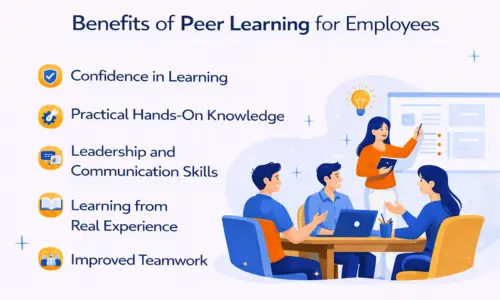
Confidence in Learning
Staff members tend to ask questions and reveal their difficulties when they interact with their colleagues.
Practical Hands-On Knowledge
The training program at Peer focuses on teaching students to work with actual business processes while they learn to solve everyday work challenges.
Leadership and Communication Skills
Teaching peers helps employees develop leadership, facilitation, and communication skills.
Learning from Real Experience
The program provides employees with actual workplace experiences instead of using abstract theoretical cases.
Improved Teamwork
Peer learning helps teams build stronger relationships which lead to better mutual support between their members.
Peer Learning Methods in the Workplace
Peer-to-Peer Workshops
The staff organizes brief training sessions which they use to teach their colleagues about new methods and acquired expertise and discovered knowledge.
Collaborative Learning Tasks
Teams work together to solve problems and finish their learning assignments.
Group Projects
The educational approach of project-based learning helps students develop teamwork abilities while they learn to evaluate their work.
Internal Knowledge Sharing Sessions
The organization should establish scheduled meetings which allow staff members to share their knowledge and showcase their most effective methods.
Peer Mentoring
The team members establish support networks through both formal and casual mentoring programs.
Roundtable Discussions
Open discussions around challenges, trends, or new ideas.
Online Communities and Slack Channels
The workplace features digital platforms which enable staff members to both seek answers and share their understanding with each other.
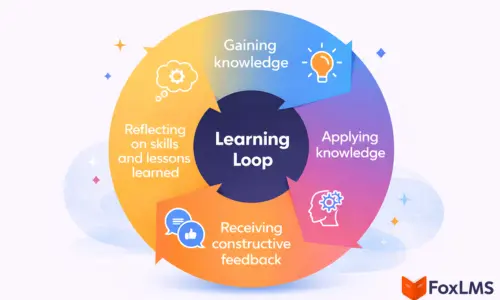
Debrief Sessions After Projects
Teams evaluate their performance by identifying successful elements and unsuccessful aspects and potential areas for enhancement.
Steps to Implement Peer Learning in Your Company
Identify Learning Objectives
Peer learning should focus on developing specific skills and knowledge domains.
Map Peer-Learning Activities to Skills
The organization should link its operations to particular competencies which support its business objectives.
Create Peer Learning Groups
The organization should establish small groups which unite members who share professional roles or common interests.
Assign Learning Roles
The system should actively support all participants who lead groups and contribute to them and monitor their activities.
Use a Learning Management System (LMS)
An LMS enables organizations to organize discussions while monitoring student involvement and storing all educational resources in one location.
The guide on continuous learning shows how LMS features enable students to work together in their learning process.
Track Engagement and Outcomes
The system should track student involvement and their academic progress throughout the entire period.
Encourage Employee-Generated Content
The system should allow staff members to develop guides and videos and create documentation.
Celebrate Learning Achievements
Recognize contributors and highlight shared learning successes.
Tools and Platforms for Peer Learning
LMS Discussion Features
The platform allows students to engage in organized peer-to-peer discussions through its discussion board and comment features.
Slack & MS Teams
Real-time communication enables students to learn from each other through casual peer-to-peer interactions.
Internal Knowledge Libraries
The system stores and maintains organizational knowledge through its shared repository function.
Video Learning Platforms
The system enables staff members to create brief video recordings which serve as explanations.
Microlearning Tools
Short learning units enable faster knowledge sharing between participants.
Collaborative Document Sharing
The system enables teams to work together through document sharing which helps them create content and receive feedback.
Best Practices for Successful Peer Learning
Make Participation Voluntary
Voluntary participation leads to better learner engagement and trust between participants.
Build a Supportive Environment
Encourage openness and psychological safety.
Encourage Questions
People should feel comfortable to ask questions and reveal their difficulties at any time.
Keep Sessions Short
Short, focused sessions are more effective and sustainable.
Avoid Formal Presentations
The most effective peer learning occurs through natural discussions which avoid following a prewritten script.
Promote Open Feedback
The process should include opportunities for students to receive helpful feedback which helps them understand their work better.
Reward Contributors
The organization should identify staff members who regularly distribute their expertise to others.
How to Measure Peer Learning Success
Engagement Rates
In order to measure success it’s important to track participation and activity levels.
Course Completion
The system needs to track the progress of all peer-supported learning programs.
Knowledge Retention
The assessment of student understanding should occur through classroom discussions and hands-on learning activities.
Team Productivity
Teams operate at higher efficiency levels.
Performance Improvements
Measure skill application and business impact.
Internal Skill Mobility
The system needs to monitor all internal position changes together with employee skill progression.
Conclusion
The practice of peer learning enables organizations to achieve collaboration and innovation through the process of converting regular workplace activities into collective learning opportunities. The system enhances workplace learning culture which enables organizations to build their internal talent base at a quicker pace.
Companies establish a learning ecosystem through employee knowledge sharing which enables them to develop a system that learns continuously while it expands between teams and adjusts to organizational transformations.
FoxLMS stands as an alternative solution for organizations which require adaptable learning management systems to support peer learning and hybrid training approaches. The platform enables team members to work together while providing them with a simple platform to exchange knowledge with each other.
FAQ
Why is peer learning important for companies?
The system enhances student participation while it helps students learn faster and it creates an environment which fosters excellent learning practices.
Peer learning operates through student-to-student interactions which differ from mentoring because it involves an experienced mentor who guides students.
Can peer learning replace formal training?
Peer learning functions as a training method which supports traditional education but achieves its best results through collaboration with established educational programs.
Companies begin their peer learning programs through what process?
The achievement of goals becomes possible through three essential steps which include defining objectives and building peer relationships and implementing appropriate collaboration technology.