Starting off right doesn’t mean things stay on track. Years go by, memories dim, people start cheating – just a bit. Standards slip when nobody’s watching. Skills fade, yet behavior stays the same. Good employees often stick to old ways, missing what’s changed now.
Here’s why updating knowledge matters. Training keeps information alive across teams, lines up people with shifting methods, while stopping tiny errors before they grow large. Where things change quickly, this kind of learning does far more than sit well – it holds everything together.
This piece outlines refresher training – what it covers, when employers might use it, along with advantages, practical cases, plus steps to create useful employee learning sessions that boost outcomes.
Why Refresher Training Is Essential
Studies on picking up skills keep revealing most lose big chunks over time, unless they reuse or use what they learned.
Because of this, things play out differently at work.
- Inconsistent execution of tasks
- A drop in standards over time.
- Mistakes happen more often. Errors creep into work at a higher pace.
- Compliance and safety risks
Every now and then, a push in the right direction helps. This kind of learning resets things quietly. Everyone meets at the starting point once they’ve moved forward. What counts as doing well now stands clear, different from before. Time changes answers.
Risks of Relying Only on Initial Training
When hiring relies entirely on learning programs for new staff, problems can stay out of sight.
- Most workers stick to old methods, unaware they are still using outdated processes.
- Teams develop inconsistent ways of working
- New regulations are misunderstood or ignored
- Top performers tap into recall rather than rigid rules
When learning stops being planned, problems build up slowly. They show up later as mistakes, unhappy customers, or not meeting standards.
What Is Refresher Training?
Refresher training is a structured learning activity designed to reinforce, update, or correct previously learned knowledge and skills. It focuses on what employees already know but may have forgotten, misunderstood, or stopped applying consistently.
How It Differs From Onboarding and Continuous Training
Right from day one, fresh faces learn what their job involves – how things work, who does what, and where help lives.
With fresh abilities and skills being the center stage, lifelong learning is a must.
Every now and then, people need a quick update on what they already know. This kind of learning keeps things aligned and uniform as conditions change.
A short refreshment course often zeroes in on actual job situations instead of abstract ideas. Its aim? Practical links, not classroom rules.Continuous training adds to the knowledge where refresher training reminds or improves what employees already know.
When Is Refresher Training Needed?
Training needs a spark, not just routine. What makes sense is linking it to real events that show it’s needed. Here are some of them:
Skill Decay Over Time
When something does not happen often, correct results get worse. This shows up in:
- Emergency procedures
- Rare but high-risk tasks
- Specialized software features
Process or Policy Changes
When workflows or rules change, people still act like before. A short learning session helps them sync up fast.
Compliance Requirements
Every now and then, employees need updated lessons on how things are done – this lines up with rules companies must follow.
Performance Drops
A drop in KPIs, higher errors, or more customer gripes may mean a quick skills check-up instead of total relearning.
Benefits of Refresher Training
Improves Knowledge Retention
Right when it counts, brief yet clear follow-up checks boost chances that workers remember key details. Timing matters – a quick, targeted review ties to real situations.
Reduces Errors and Rework
A push in the right direction keeps things running smoother. Mistakes happen less often when people know exactly what to do. That clarity cuts down wasted minutes and cuts expenses tied to errors.
Maintains Compliance
Refresher training helps organizations demonstrate that employees understand and follow required standards.
Boosts Confidence and Productivity
When workers feel uncertain or unsure, they often pause before acting. A short learning session brings things back into focus – this helps tasks move forward quicker with greater assurance.
Standardizes Performance
This way, each person knows what to do, when to act, how things work across teams. Length of service does not change that. Roles might change, yet standards stay fixed.
Common Refresher Training Examples
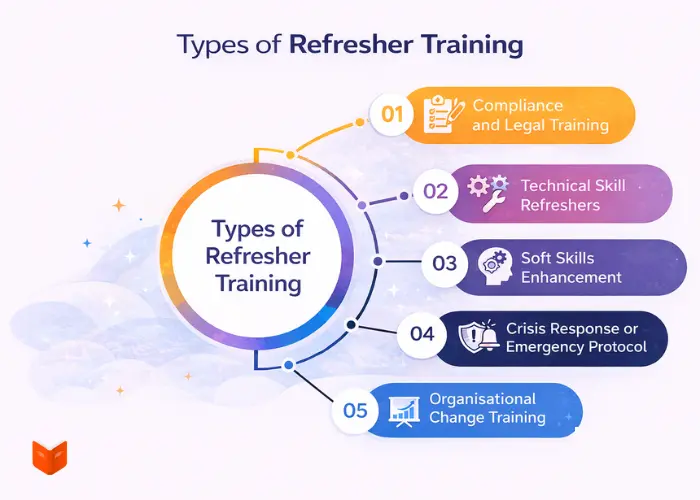
Compliance Refresher
Every year – or at set intervals – staff get learning on rules they must follow, including data privacy, professional conduct, and sector laws.
Safety Training
Fresh safety checks happen often, they lower risks and make sure people act right when trouble hits.
Product Updates
When things like features, pricing, or offerings shift, sales and support specialists sometimes require updated information.
Software and Process Updates
Small shifts in how the system runs might seem minor, yet they often trip up teams without steady check-ins on updated methods.
How to Build an Effective Refresher Training Program
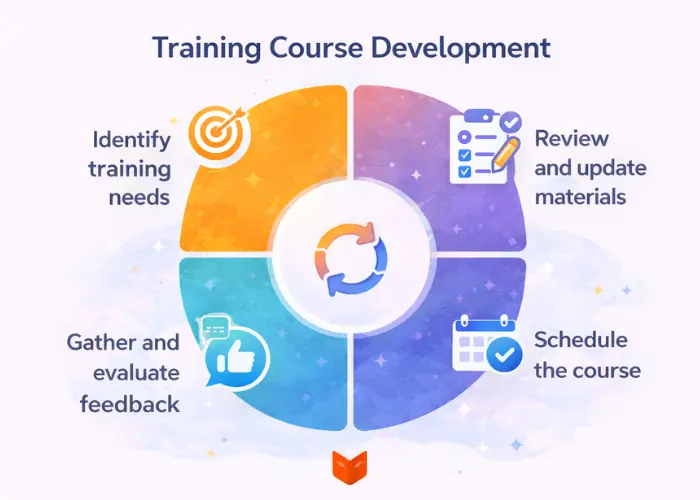
Identify Critical Knowledge
Focus on where it matters:
- Tasks linked to safety, company compliance, or quality
- Processes with frequent errors
- Skills that degrade without practice
Choose the Right Format
Effective refresher training formats include:
- Microlearning modules
- Bite-sized clips
- Scenario-based quizzes
Reinforcement matters most, yet too much data dilutes its effect.
Set Frequency and Timing
Refresher sessions hit their mark under these conditions:
- Happens on a fixed calendar pace
- Sometimes things shift – a moment, a decision, then response follows.
- Learn right when skills matter most
Keep Content Short and Relevant
Take out what doesn’t matter to daily tasks. Training updates need to fit within work hours.
Use Real Scenarios
Right off, workers see how lessons tie straight to what they do every day.
Refresher Training Best Practices
- Focus on where it falls short – skip reusing.
- Skip repeating entire lessons. Touch on where employees fail the most.
Use Short, Focused Modules
A quick peek at something familiar might take just five to ten minutes.
Reinforce Learning With Assessments
A moment’s review clears up what you know – and where things still stand unclear.
Track Participation and Results
Use information to confirm quality while tracking effects across relevant metrics.
Tools for Delivering Refresher Training
Platforms for Learning Management Systems
With the right LMS platform, you can line up, present, track team progress, plus save records on recurring skill updates without hassle.
Microlearning Tools
Perfect for quick updates that fit into regular routines.
Video Learning Systems
Showing how things are done well – that’s what video learning systems do by default. Picture this: rules stick easier when people see them play out on screen.
Learners find focus easier in today’s tools, such as FoxLMS, where refresh sessions are built step by step – no clutter, just flow. Staying on track with the group happens without pulling attention away.
How to Measure Refresher Training Success
Checking results helps confirm refresher courses actually improve performance.
Completion Rates
Keep track on how fast workers finish their required drink training tasks.
Knowledge Checks
Look at how evaluations changed before and after the training session.
Error Reduction
Watch error drops following training – fewer mistakes, fewer incidents, less rework.
Performance Improvements
Follow key performance indicators that connect straight to the updated abilities or methods.
Conclusion
Every now and then, workers need updated learning to match today’s demands. When skill levels drop, refresh courses step in – they hold things steady. Staying on track with rules becomes easier when people know the latest steps.
When companies see training as more than just procedure, their teams gain sharper skills and adjust better to change.
FAQ
What is refresher training for employees?
Employees need a quick check-in about what they already know. This kind of learning snaps their attention back to key tasks and is known as refresher training. It builds on past instruction without covering new ground.
How often should refresher training be conducted?
Role plays a big role here, so does the level of risk. Every year you usually see updates on compliance and safety. When something changes, those tied to processes or systems get refreshed too.
Is refresher training mandatory?
A company might need to update worker skills because laws say so. Sometimes, even without a law, businesses choose courses just to keep results steady.
What is the difference between refresher training and retraining?
Refresher courses update knowledge after a break, while retraining focuses on building or restoring skills when they’ve faded or fallen out of practice.
Can refresher training be delivered online?
Training updates can happen through digital platforms. Online delivery stands as one option.
That’s right. Training often happens through digital systems or short bursts of content, making it accessible anytime, anywhere.