Right now, companies face a fast-moving tech landscape, changing jobs, and pressure to find skilled workers. When industries shift, needed abilities tend to grow faster than current teams can keep up with. That’s where a skills gap analysis steps in – not just helpful but essential for long-term planning.
Looking at what workers can do and what they must do later reveals missing abilities. When those differences show up, teams adjust by teaching staff or bringing in new people. Performance gets better because tasks fit better with real needs. People stay more involved since efforts match longer-term goals. The whole setup becomes sharper, able to shift without losing momentum.
A closer look at skills gaps begins here. This piece shows what such an analysis involves, why it matters, then walks through each phase clearly. Real-world cases appear throughout, along with ways to measure results and choose useful resources.
What Is a Skills Gap Analysis?
A skills gap analysis looks closely at where people stand compared to what a job really needs. Rooted in clear steps, it reveals gaps – between needed abilities and those employees already bring. That space matters because goals depend on proper fit.
Looking closely at what people know and can do – that is what a skills gap assessment does. Focused on things like tools, behavior, direction, or tasks tied to certain jobs. Results show where employees might require extra lessons, guidance, or help to get results needed. Not just about knowing stuff – also how they work together and handle situations. Ends up pointing to real gaps that affect outcomes.Companies sometimes pull together a template for gap analysis – this keeps things consistent across units. Comparing jobs becomes smoother that way. Progress shows up clearer when checked later.
Purpose of Conducting a Skills Gap Analysis
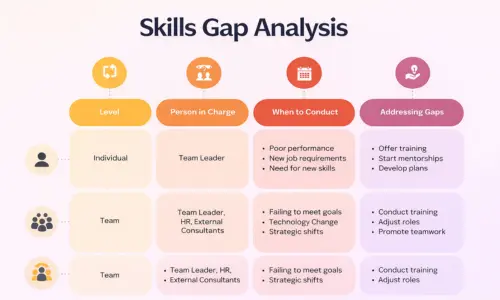
Aligning Workforce Skills with Organizational Goals
A key motivation behind skills gap analysis lies in matching team abilities to company targets. When organizations aim to shift digitally, enter fresh regions, or implement tech upgrades, staff expertise needs to fit the path forward. Without proper skill alignment, progress stops.
When done right, spotting talent gaps links long-term goals to how teams will be shaped later – this way, those in charge get ready ahead of time instead of fixing gaps once they appear.
Identifying Training and Development Needs
When looking at what people can do, a gap in abilities often shapes how learning gets used. Rather than rolling out standard courses, companies might create specific ones where needs stand out. That kind of planning brings instruction closer to real challenges, saves effort, and lifts results for workers and leadership alike.
The World Economic Forum says workers need both stronger skills and new learning paths to stay competitive – showing why clear evaluation of abilities matters so much ahead.
Why Conducting a Skills Gap Analysis Is Important
Identifying Areas for Improvement
When skills gaps stay hidden, teams can miss key shortcomings. Spotting where abilities fall short brings those spots into view – from one person to entire groups. Seeing clearly like this helps shape smarter moves and focus on what matters.
Enhanced Employee Performance
Focusing training on real employee needs leads to better results. Filling knowledge gaps gives staff the skills and self-assurance required for better employee performance well, which boosts efficiency and quality.
Gaining a Competitive Advantage
When firms spot missing skills early, they find it easier to shift with new demands. Staying one step ahead often comes from ongoing reviews of ability – this allows them to outpace competitors stuck using old methods or only bringing people in after crises.
Increased Employee Satisfaction
When people spot ways to grow, they tend to stay involved. Upskilling and reskilling by building programs for learning shows workers are valued. That sense of value often lifts spirits, lowers leaving rates. Studies from Gallup keep revealing one thing: chances to improve matter deeply for team motivation.
How to Conduct a Skills Gap Analysis
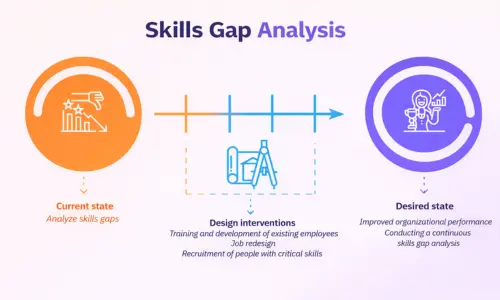
Here’s one way to start: figure out the process. It begins like this: map out each phase carefully. Each move builds on the last one. This method works well when broken into parts. The full picture emerges slowly. Details matter most during early stages.
Identify Business Goals and Objectives
Begin by making clear what the organization wants to achieve. Could be better customer experiences, using fresh tools, or growing what it offers? Each goal shapes which abilities matter most when getting there.
Determine Key Skills and Competencies
Figure out what skills are needed to reach those objectives. These might involve tools you know well, personal qualities like teamwork or patience, authority roles, or tasks tied to your position. Being specific makes judging progress easier later on.
Assess Current Skill Levels
Start by looking at what workers can already do. Surveys, checks, reviews, or watching them give useful insights. Figure out exactly where people sit with needed abilities. That clarity comes from real-life evidence, not guesses.
Identify the Gaps
Start by putting today’s and needed abilities into written records. Then look at both sides side by side, noticing missing pieces. Gaps show up when people do not have enough expertise – or when learned traits have become obsolete.
Take how teams handle tasks – sometimes one group nails old-style promotions while another struggles with new tools like AI or data dashboards. That gap stands out clearly when looking at real work situations.
Develop a Plan
Now comes building an action plan – to tackle those gaps. Training focused on specific skills might help, also bringing in mentors or shifting roles around. Sometimes bringing people aboard is the right move. If it’s thoughtful, what we learn from the review connects straight to real change.
Examples of Skills Gaps in the Workplace
What missing skills look like changes across fields and how far a company has come.
Industry-Specific Skills
Some differences come from unique expertise needed across fields – like rules in medical settings or data insights in money industries.
Soft Skills
Nowadays, talking together, working as a team, figuring things out, plus adjusting quickly matter more than before. It often happens that companies already have solid tools and know-how, yet people skills drag along too slowly.
Leadership Skills
When a company expands, leadership shortages tend to follow. People moved into supervisory positions might not yet have solid guidance methods. Making choices and planning strategies can also be tricky for them.
Technical Skills
Fast shifts in tech often leave people behind when it comes to know-how. Take cybersecurity – skills there are stretching thin. Cloud tools? Same issue. Even basic number crunching now needs sharp attention. Gaps show up where learning lags.
Methods for Evaluating Employee Skills
What comes first is picking the correct way to check things – it shapes how we see results.
Self-Assessments
Looking back at what someone can do helps them understand their strengths. Even if it comes from personal opinion, it might show where growth feels tough. That view matters when spotting gaps in skill.
Manager Assessments
Seeing how people perform helps figure out their strengths. Watching daily work shows what staff can really do. Results give clues, timing matters too. Fairness improves when judgments tie to actual duties.
Peer Assessments
Looking at peer comments can show how someone works within a group. Their observations often highlight gentle strengths instead of loud actions.
360-Degree Assessments
Looking at performance from every angle means gathering input from supervisors, coworkers, and team members. Because insights come from so many sides, the picture of ability and growth opportunities becomes fuller.
Tools and Techniques for Skills Gap Analysis
Skills Assessment Tools
When it comes to digital grading systems, things often move faster because software tracks results efficiently. Some programs adjust tests on the fly based on what skills are being measured. A good number allow teachers to shape questions precisely for their class needs.
Data Analysis Techniques
Looking at assessment results reveals hidden rhythms. Because of this, teams can zero in on where progress slows down first. Resource flow becomes smarter when guided by real evidence.
Leveraging Technology
When it comes to spotting gaps in skills, today’s tech tools in HR and learning make a real difference. Systems that manage training often log who knows what, point learners toward next steps, while watching their journey unfold. Shifting toward digital methods helps stretch resources without losing accuracy, making it work smoothly from department to department.
Conclusion
Spotting missing skills isn’t just about checking boxes – it shapes how teams fit with company direction. When gaps show up, efforts shift toward matching staff strengths to real objectives, crafting smarter learning paths, while quietly securing better outcomes down the road.
When looking at skill gaps, results often lead to better ongoing growth. Work that digs into strengths – or lacks them – tends to spark stronger involvement. In today’s fast-moving work world, knowing your team’s abilities helps keep pace. Those who take time to assess and build up their workforce usually see clearer paths ahead.
FAQ
1. What is a skills gap analysis used for?
Looking at worker abilities, this method spots gaps between needed talents and what staff already possess. Training choices, recruitment paths, or growth plans often follow such insights.
2. How often should a skills gap assessment be conducted?
Every year – or whenever big shifts happen in strategy or tech – companies often gain by checking where their people stand skillwise.
3. What’s the difference between skills gap analysis and training gap analysis?
Looking closely at where people fall short shows gaps in abilities. What matters most here is seeing what kind of learning it really takes to get better.
4. How do you identify skill gaps effectively?
Spotting missing skills often starts with checking test results or review outcomes. Feedback from managers might point out weak areas just as easily. Surveys among staff members sometimes reveal patterns showing where abilities fall short. Peers’ observations can also highlight gaps that aren’t obvious elsewhere.
5. Can small businesses benefit from a skills gap analysis?
That’s right. A tiny squad might still apply a basic checklist for spotting skill gaps – helping them pick what to work on while making sure people inside the company possess necessary abilities as things scale up.